
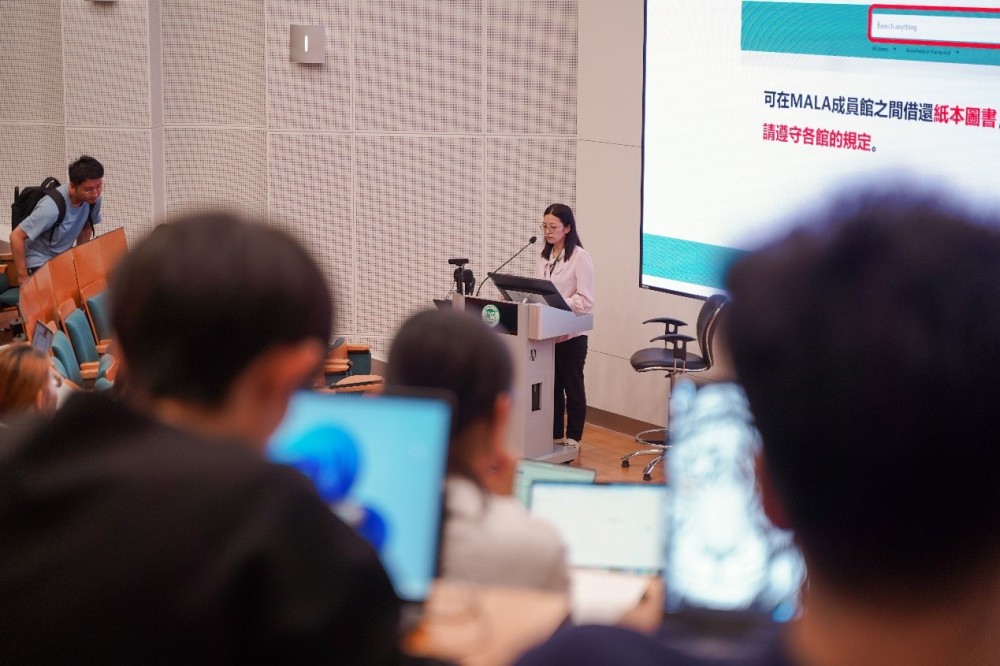
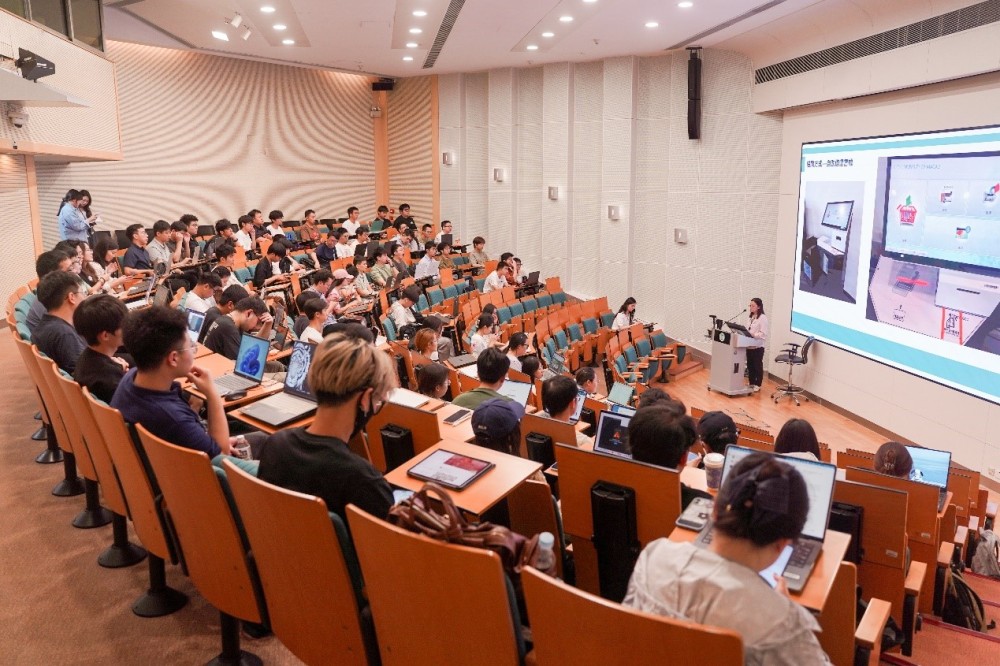
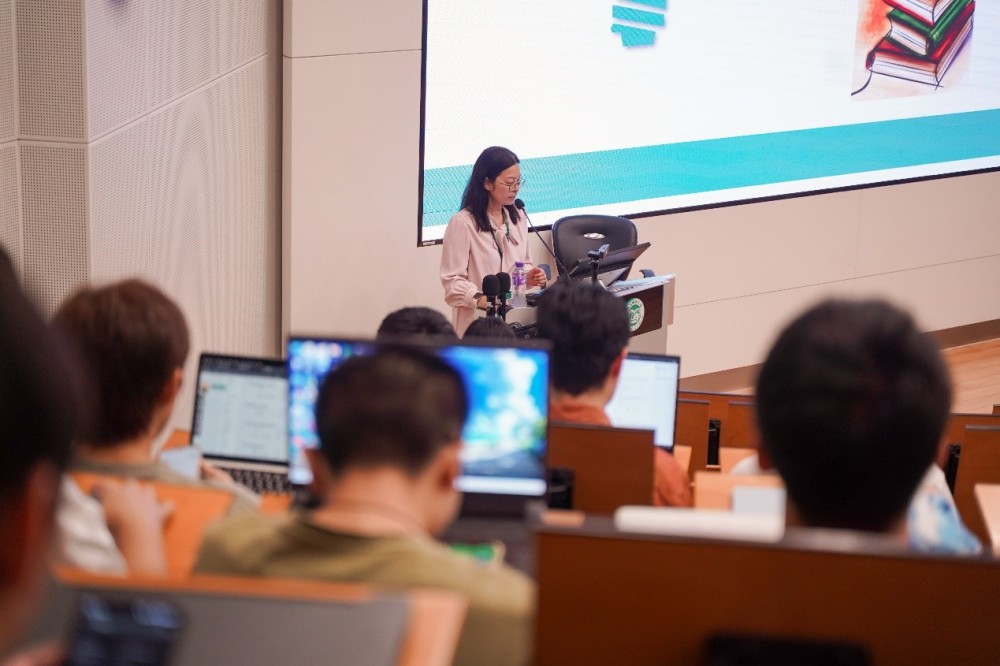
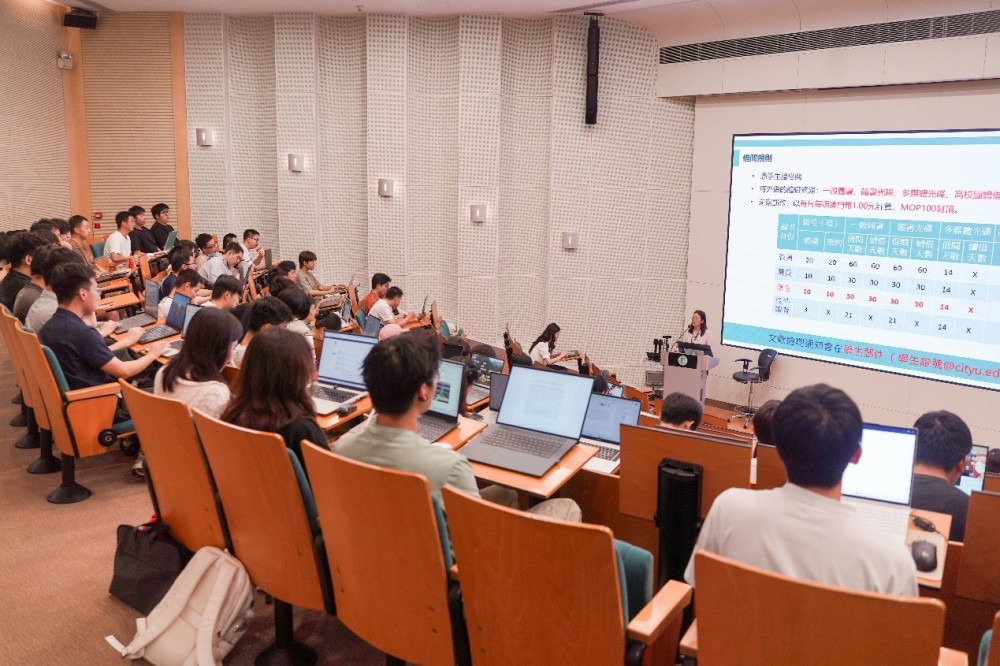
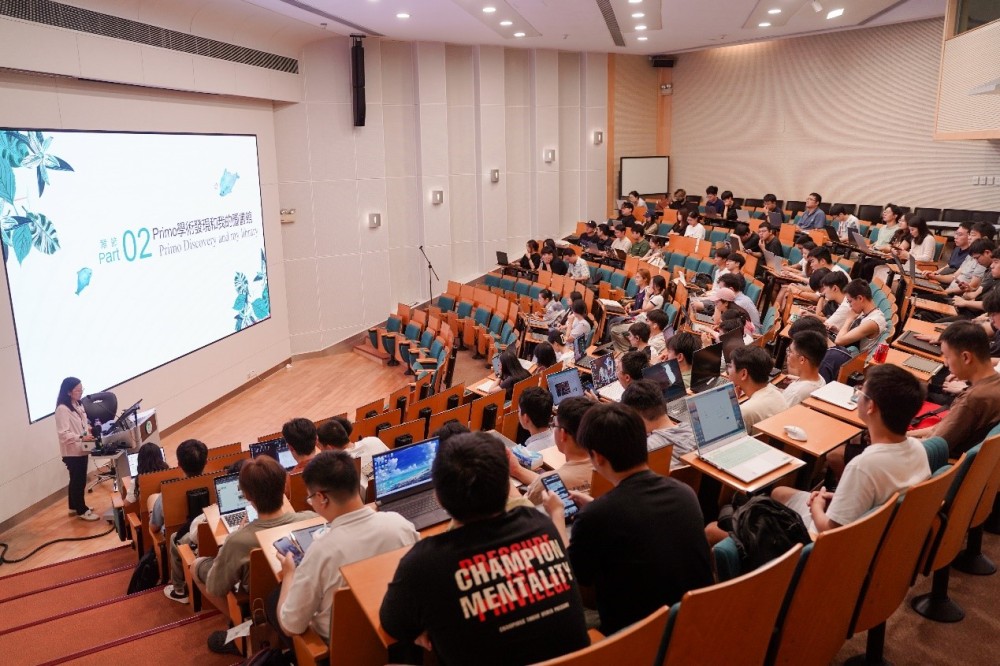
On the morning of October 21, 2026, the University Library and the Faculty of Data Science of City University of Macau jointly organized the “Workshop on the Use of Library Literature Resources” at HG02, Ho Yin Convention Centre. The workshop focused on academic database searching, reference management, and English-language plagiarism detection systems. It aimed to help faculty members and students become more familiar with the University Library’s academic resources and research tools, enhance their ability to retrieve, organize, and manage academic literature, and provide practical support for coursework, academic writing, and research.
The workshop began with an introduction to the professional and multidisciplinary databases provided by the University Library, including CNKI, Web of Science, Scopus, EBSCO, Gale, ProQuest, Emerald, CEIC, JSTOR, and SocINDEX with Full Text. Taking into account the coverage and features of different databases, the training introduced basic methods for literature searching, keyword formulation, filtering search results, and accessing academic resources. This helped participants gain a clearer understanding of the functions and appropriate applications of different databases.
The workshop then moved on to reference management and academic writing tools. Participants were introduced to the basic functions and use of EndNote, including importing references, organizing literature, managing citations, and formatting reference lists. In addition, the training covered Turnitin, an English-language plagiarism detection system commonly used by postgraduate students. Its main functions, usage, and the interpretation of similarity reports were explained, helping participants better understand academic writing requirements and strengthening awareness of academic integrity and proper citation practices.
Covering literature retrieval, resource screening, reference management, and plagiarism checking, the workshop was highly practical and relevant to academic study and research. Through the systematic training, participants developed a deeper understanding of the academic resources available through the University Library and became more familiar with commonly used information retrieval and reference management tools. The workshop therefore provided a solid foundation for future research projects, academic paper writing, and improved research efficiency.
The Faculty of Data Science will continue to strengthen collaboration with relevant departments across the University, further integrate academic resources and learning support services, and provide more comprehensive resource support for teaching, learning, and research.
