
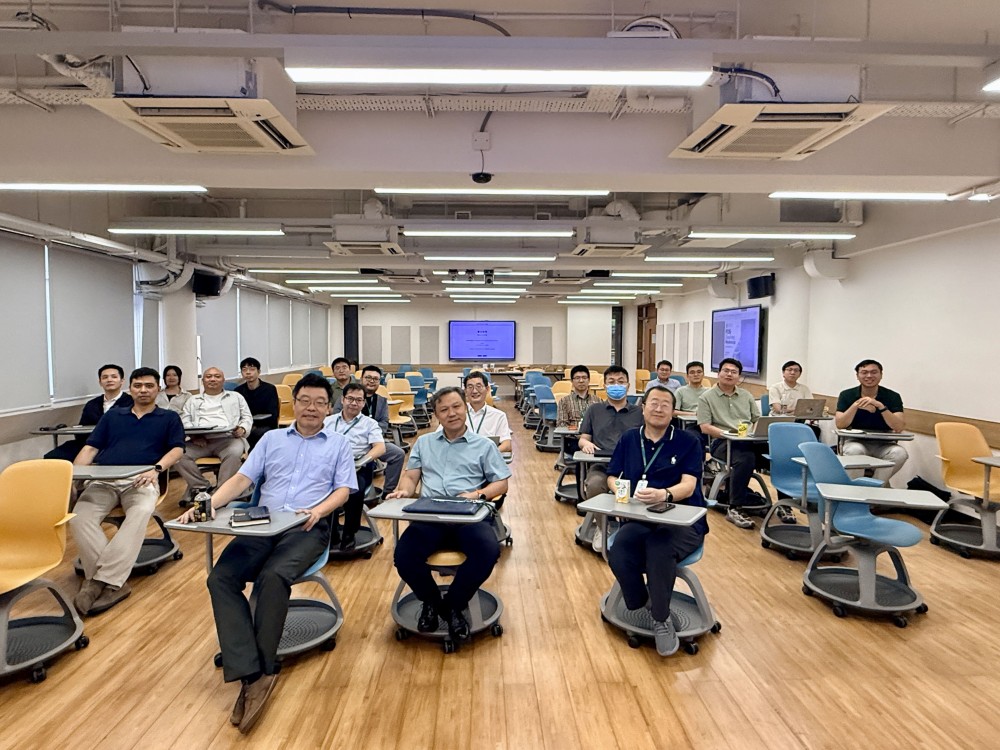
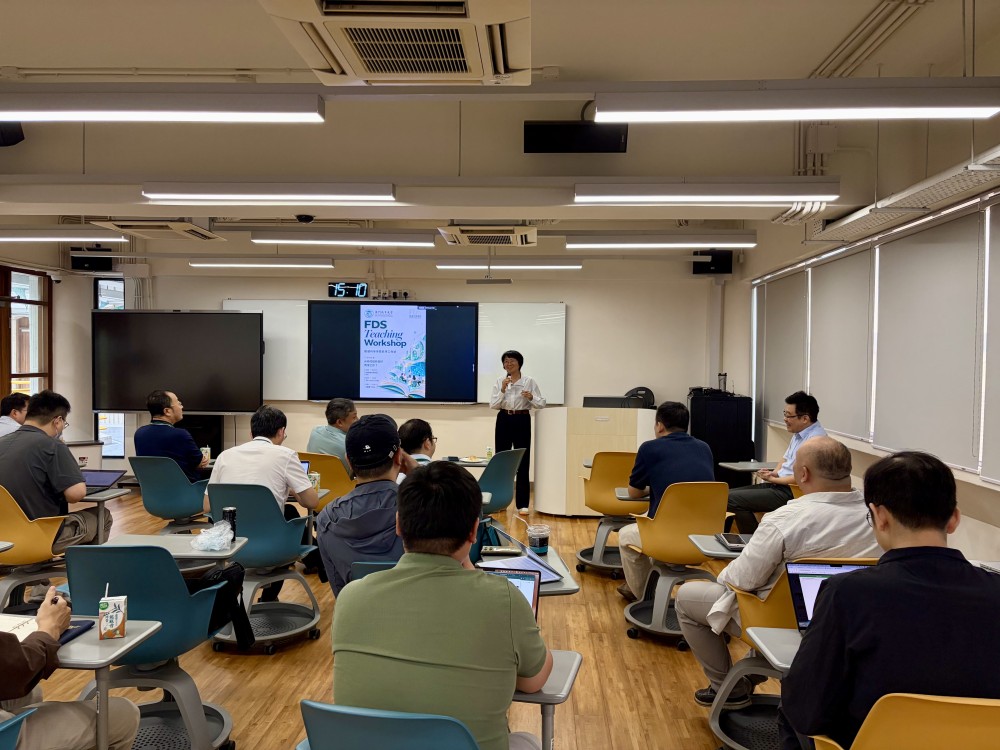
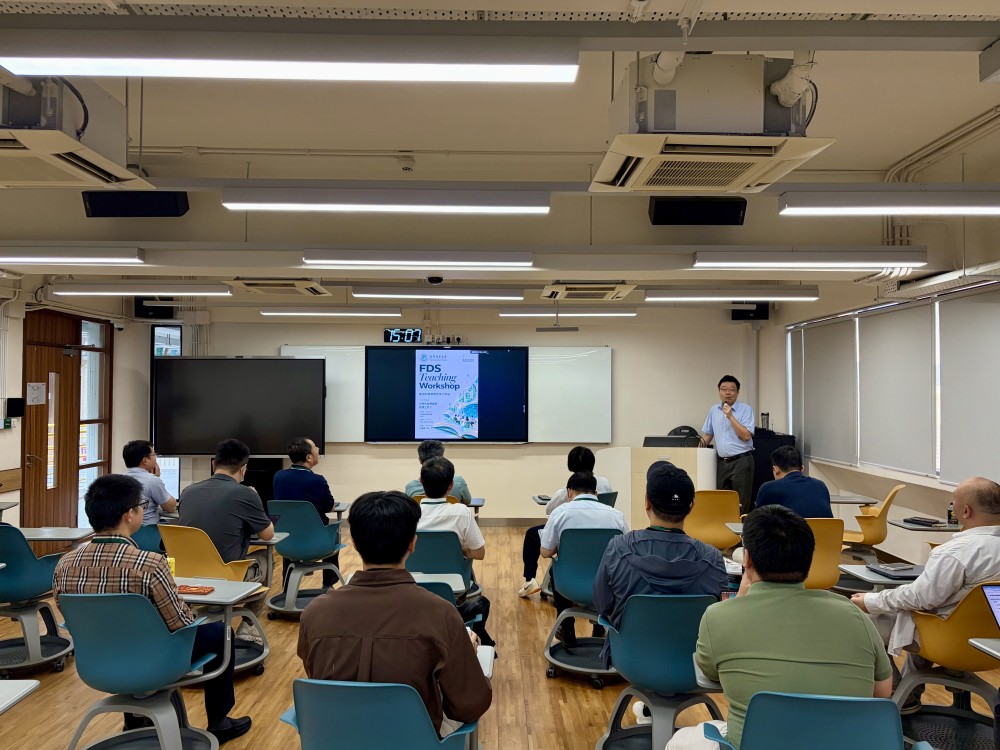
To enhance teaching quality, promote experience exchange among faculty members, and explore new opportunities and challenges in education and teaching in the age of artificial intelligence, the Faculty of Data Science held a teaching workshop on November 4, 2026. The workshop, themed “How to Teach Well in the AI Era?”, featured opening remarks by Dean Zhu Tianqing of the Faculty of Data Science and was moderated by Associate Dean Zhu Jiawei. Faculty members participated actively.
In her opening remarks, Dean Zhu Tianqing said that the rapid development of AI technology is profoundly affecting the higher education ecosystem. Teachers should actively embrace technological change while remaining committed to the original purpose of educating people, continuously exploring innovative teaching methods, and improving classroom teaching quality and student learning outcomes. She encouraged all faculty members to take this workshop as an opportunity to strengthen exchange, build consensus, and jointly advance the faculty’s teaching work to a new level.
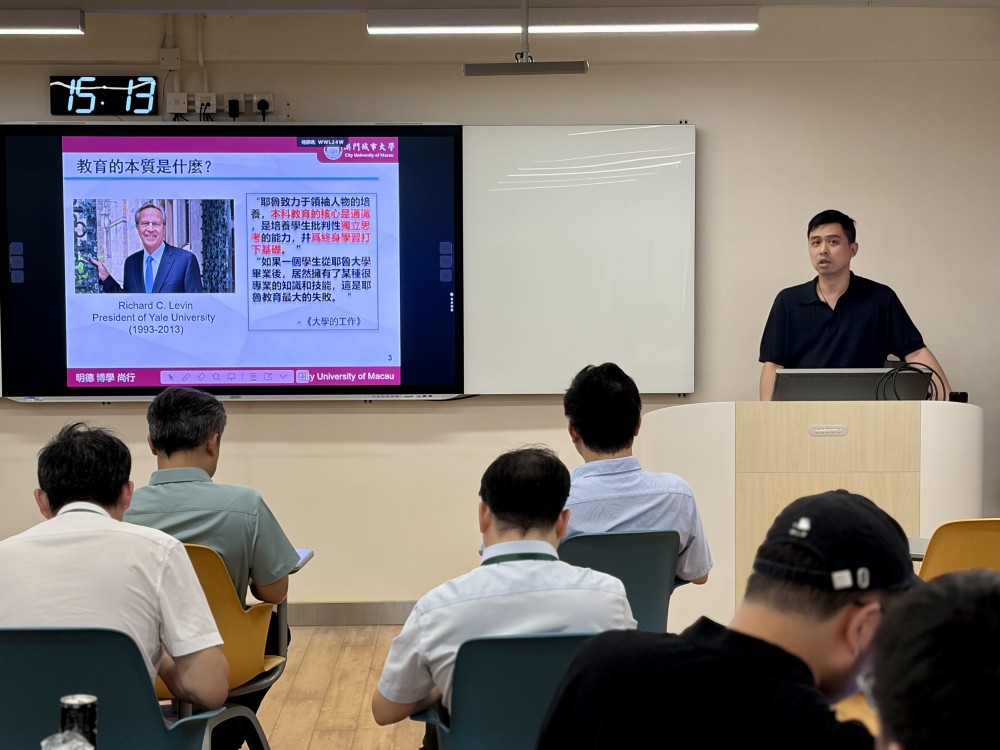
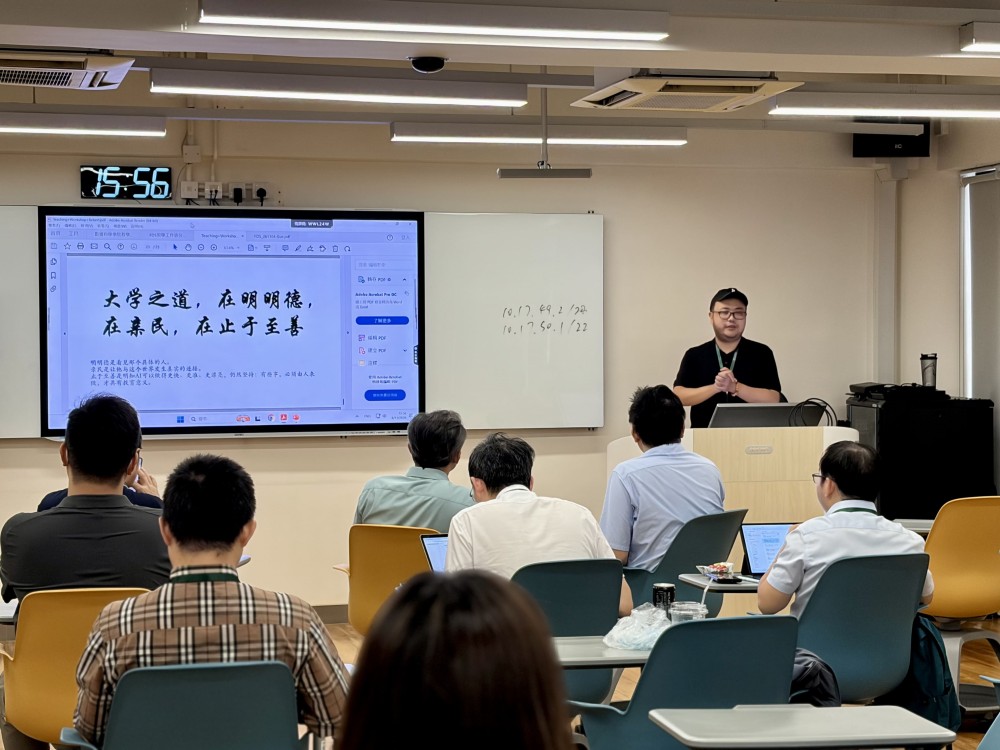
The workshop invited a representative of program coordinators and four teachers to give presentations. Associate Professor Ying Zuobin, the program coordinator of the Doctoral Programme, began with the philosophy of higher education and reviewed the limitations of the traditional teaching model characterized by “teacher-centred, textbook-centred, and classroom-centred” approaches, pointing out shortcomings in areas such as student agency, practice orientation, and assessment standards. Reflecting on teaching in the AI era, he proposed three issues for teaching reflection: shifting assessment toward process-oriented and performance-based evaluation to prevent cognitive inertia; cultivating “rational skepticism” to address AI hallucinations and academic integrity; and transforming the teacher’s role from imparting knowledge to cultivating abilities while reshaping the teacher-student relationship.
Four teachers then gave thematic presentations. Associate Professor Jing Fengshi spoke on “Humanistic Care and Emotional Integration in Education and Teaching in the AI Era — Seeing a Concrete Person.” He pointed out that the humanistic assessment triangle in the AI era should consist of “moderate closed-book examinations + structured current-affairs and humanities assignments + teachers’ in-person interpersonal judgment,” and emphasized that “cultivating who uses AI is more important than cultivating whether one can use AI.”
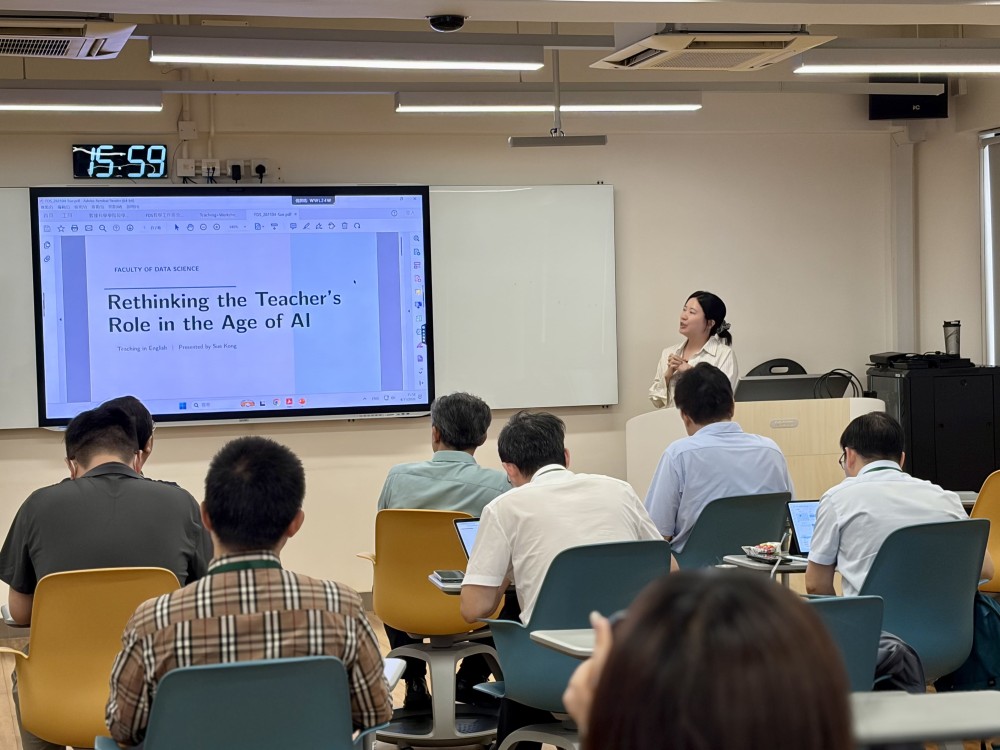
Lecturer Kong Sio Fong spoke on “Reshaping the Role of Teachers in the AI Era,” exploring teachers’ positioning and responsibilities amid changes in teaching models. She encouraged teachers to make good use of AI tools to improve teaching efficiency while also playing a role in guiding, inspiring, and accompanying students’ growth.
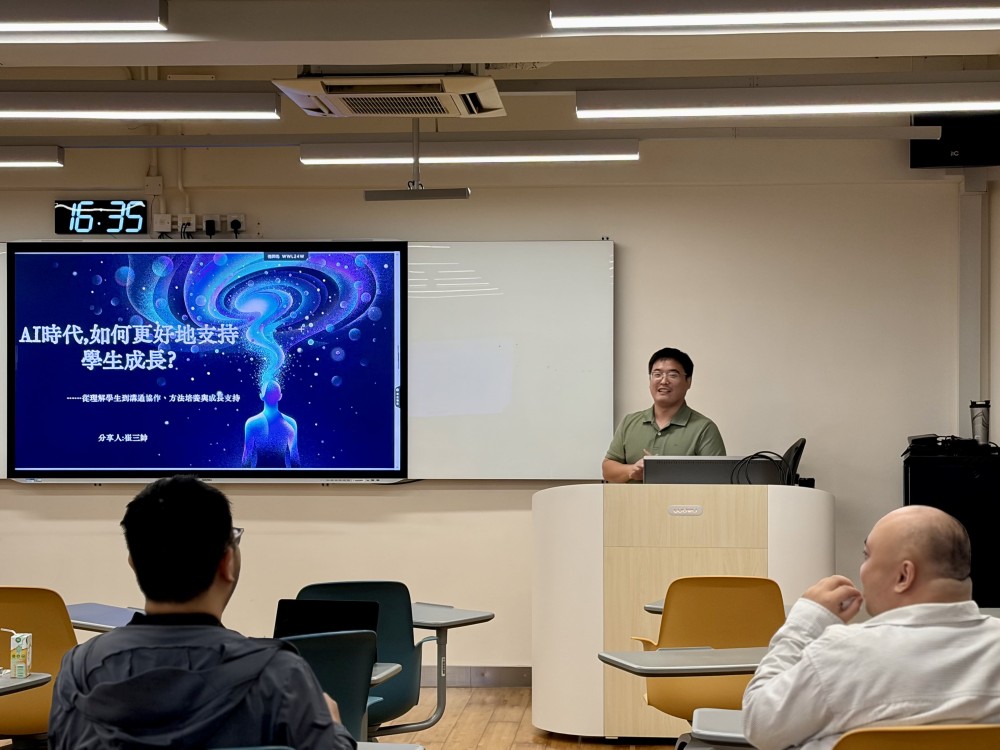
Assistant Professor Cui Sanshuai spoke on “How to Better Support Student Growth in the AI Era?” He shared insights from understanding students to communication and collaboration, method cultivation, and growth support, and explored how teachers can attend more comprehensively to students’ learning status and growth needs in an AI environment and provide them with appropriate guidance and support.
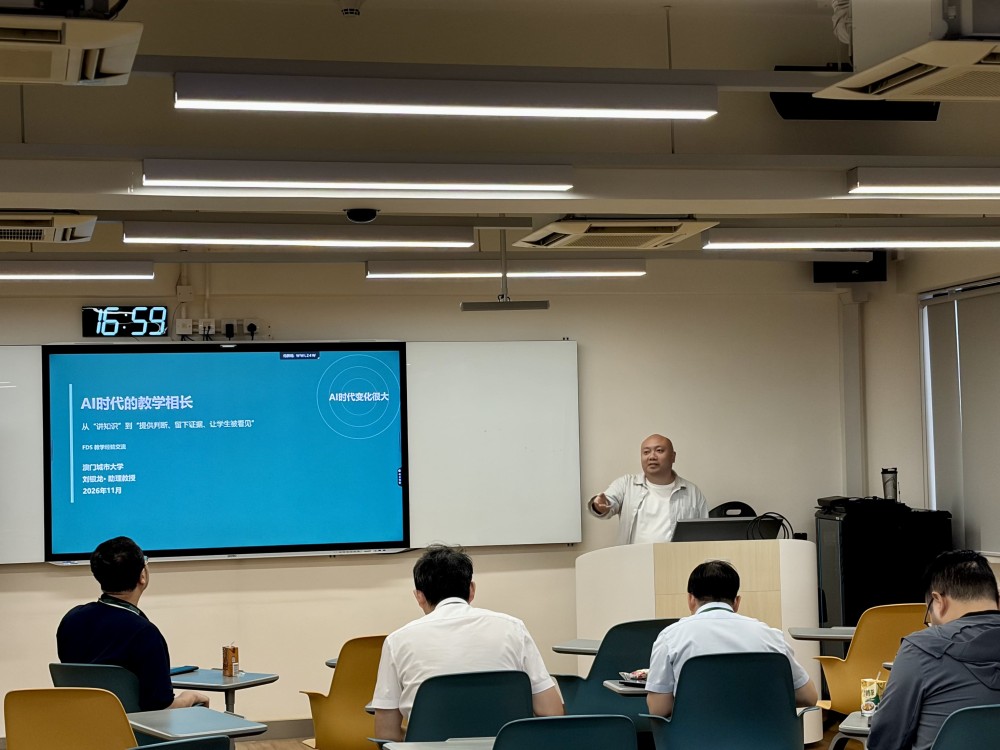
Assistant Professor Liu Yinlong spoke on “Mutual Learning and Growth Between Teachers and Students in the AI Era.” Drawing on teaching practice, he described how teachers and students can learn together and promote each other in an AI environment, emphasizing the importance of continuous reflection and teaching innovation for enhancing professional competence.
The workshop provided an interactive platform for faculty members to engage in in-depth discussions on teaching concepts, curriculum design, classroom practice, and support for student growth in the AI era, share best practices, and jointly explore strategies for improving student learning outcomes. The Faculty of Data Science will continue to strive to enhance teaching quality, promote the deep integration of artificial intelligence with education and teaching, and looks forward to holding more such events in the future to further promote teaching exchange and cooperation.
