
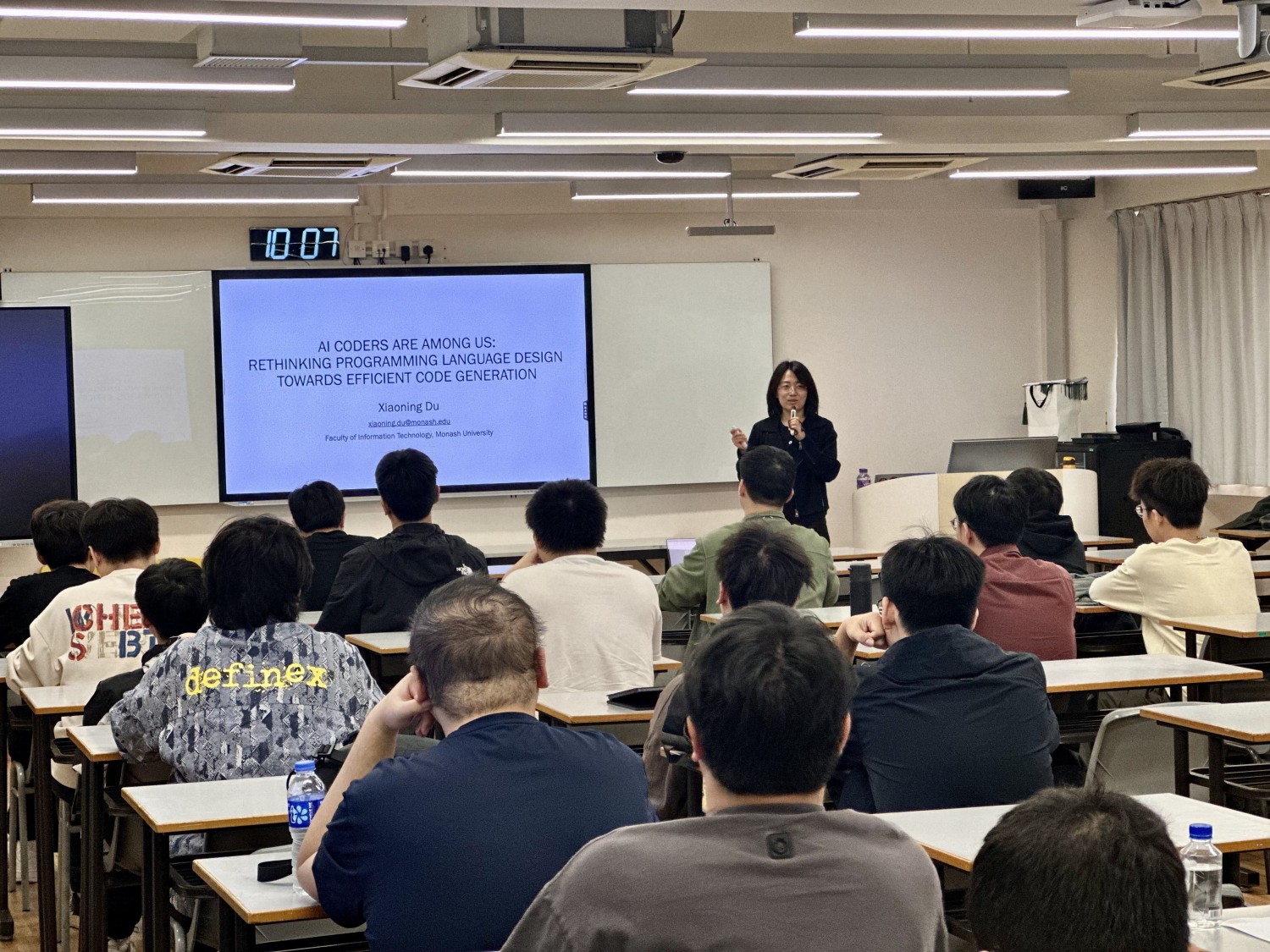
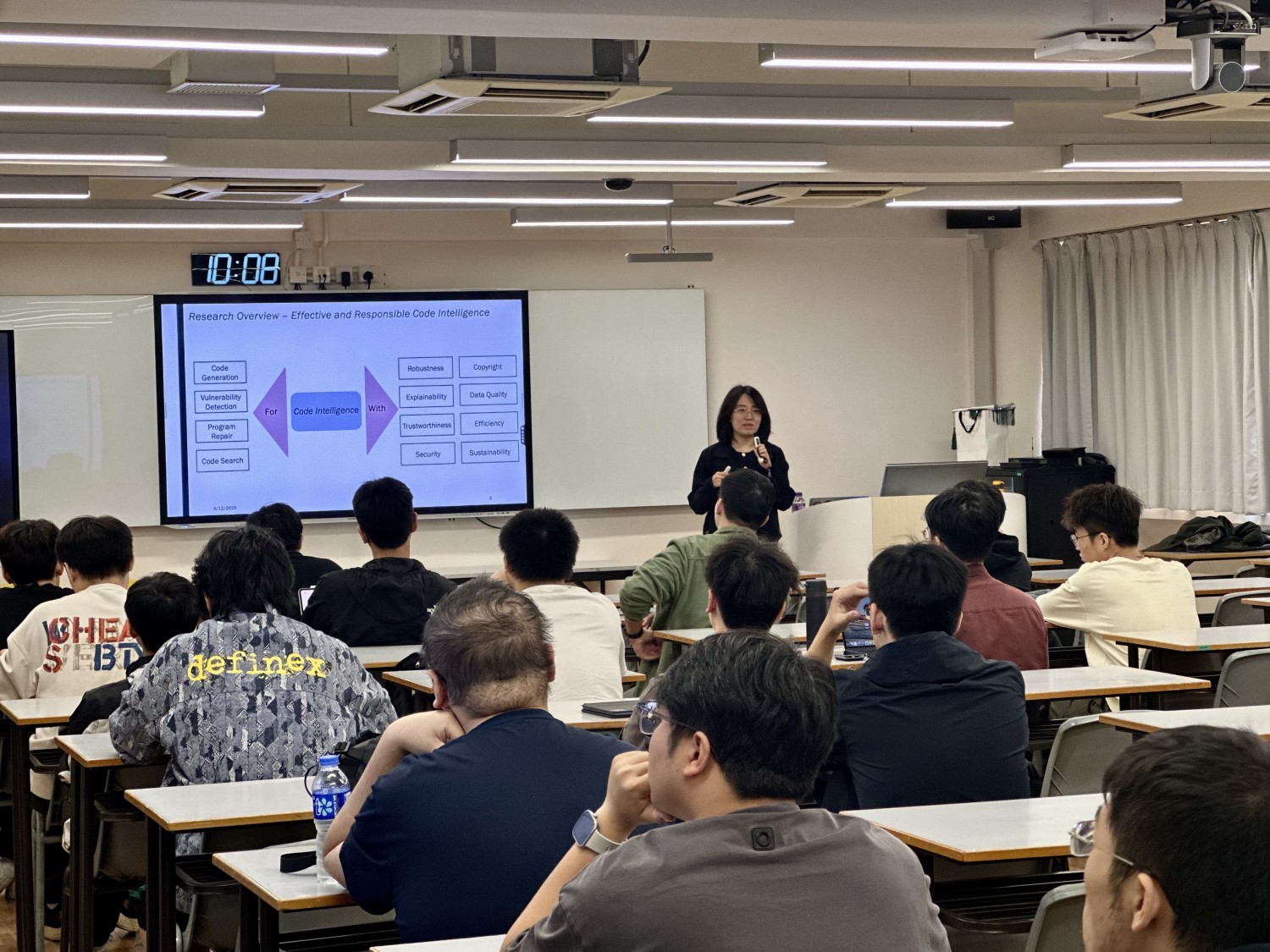
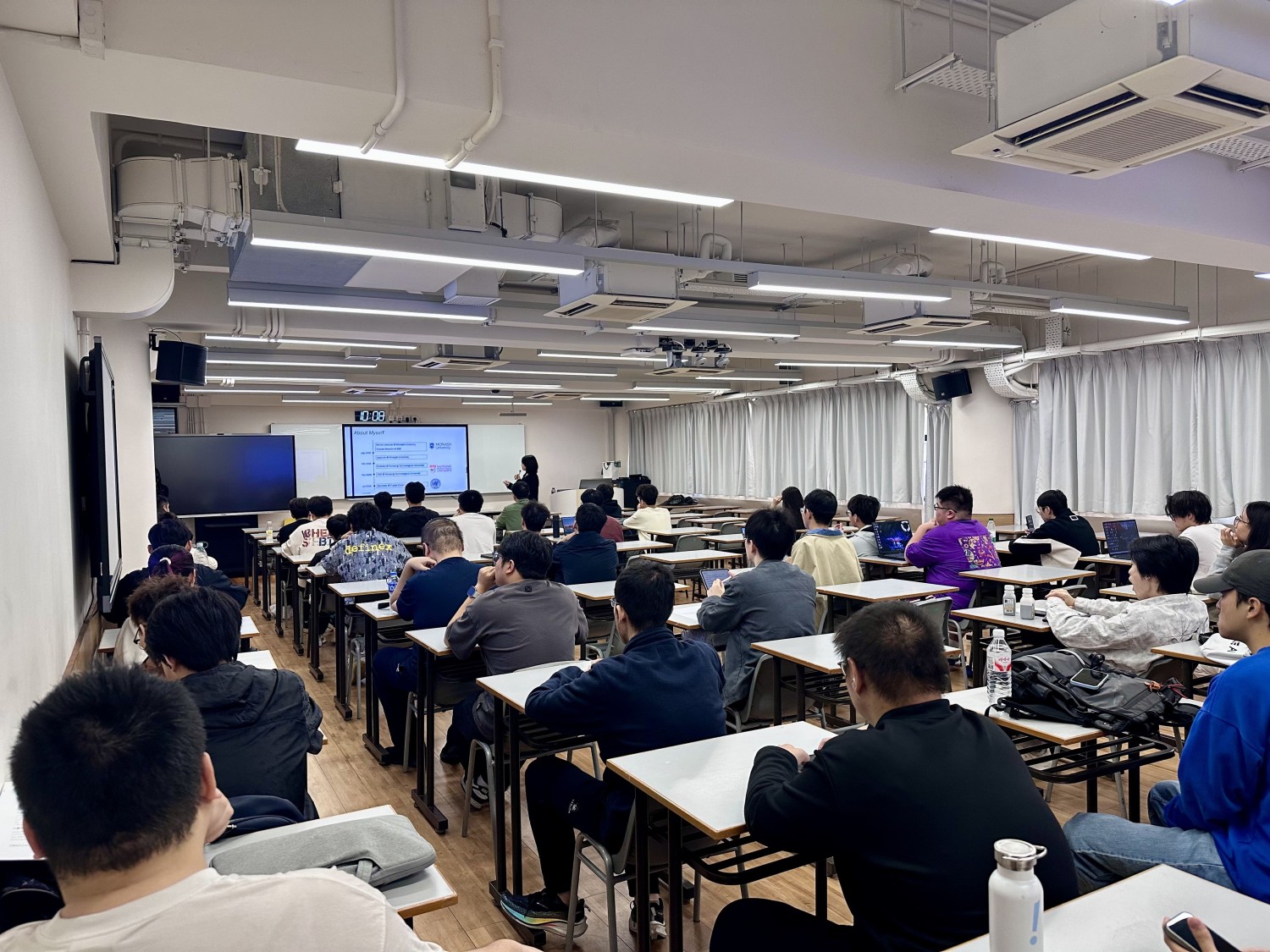
On the morning of November 4, 2025, the academic special lecture organized by the Faculty of Data Science at the City University of Macau was successfully held in Classroom T103 at the Taipa Campus. The lecture featured Professor Xiaoning Du from Monash University, Australia, as the keynote speaker. Centered on the theme "AI Coders Are among Us: Rethink Programming Language Design towards Efficient Code Generation," she delivered an insightful presentation combining academic depth and practical guidance.
The distinguished guest, Professor Xiaoning Du, possesses profound academic expertise. As an ARC DECRA Fellow, she has long been dedicated to research into the security and quality assurance of intelligent software systems. She has published over 40 papers in top-tier academic conferences and journals, and has received numerous prestigious honors, including an ACM SIGSOFT Distinguished Paper Award nomination and the 2024 Google Research Scholar Award. Her academic achievements are highly recognized within the industry. Amidst warm applause from the attending faculty and students, Professor Du took the stage to begin her lecture.
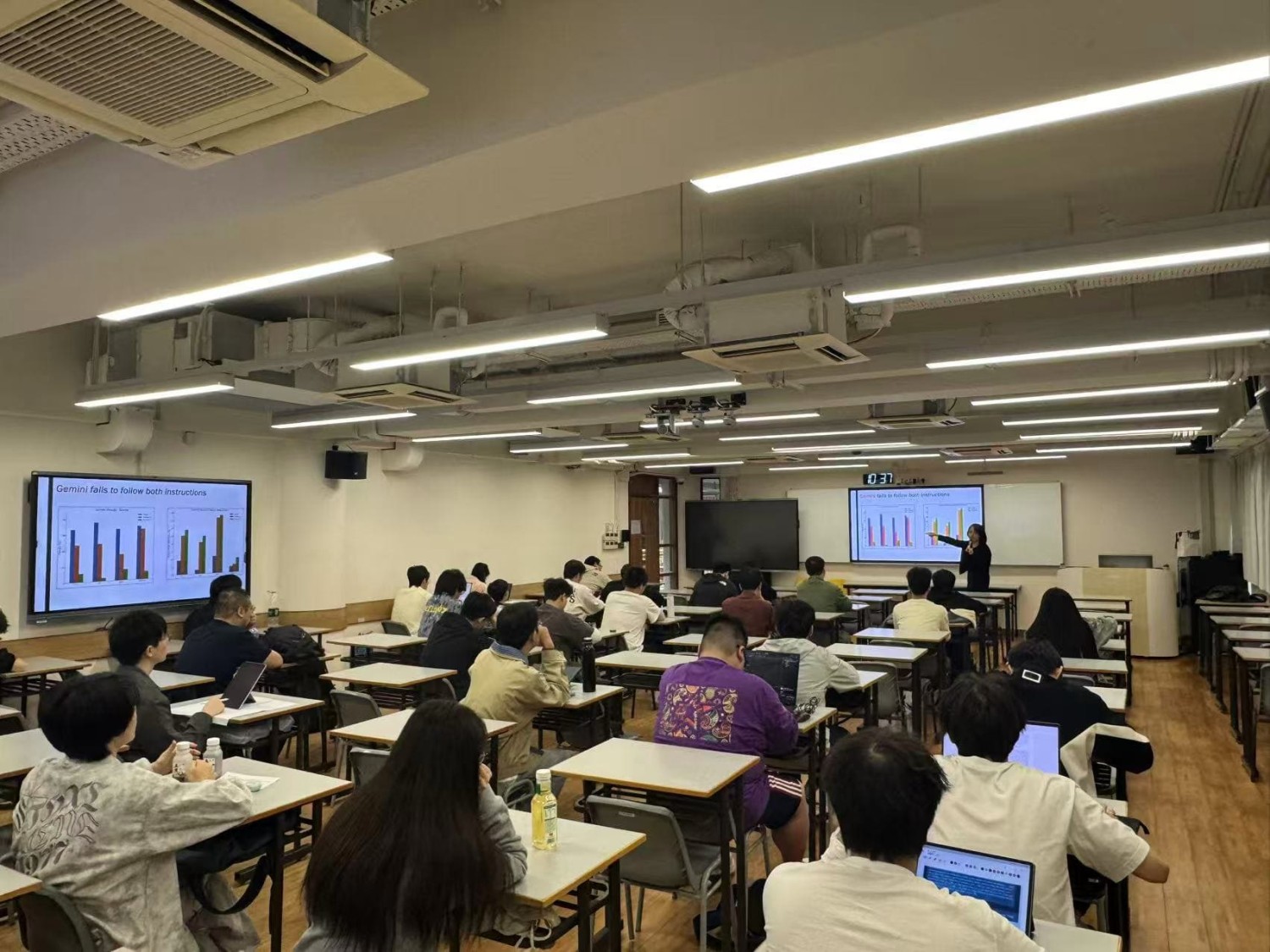
She started with the perspective that "AI programmers have integrated into our lives," and, drawing on her extensive research experience, systematically elaborated on the current state of development, core breakthroughs, and existing challenges in AI programming technology. Professor Du pointed out that with the widespread application of large language models in code generation, traditional programming language design can no longer fully accommodate the AI-driven development paradigm. How to optimize the efficiency and quality of AI-generated code from the perspective of language design has become a critical issue urgently needing resolution in the field. During the lecture, she used numerous vivid case studies to delve into core issues in AI programming, such as code logic integrity, semantic accuracy, and system security. She also proposed a series of forward-thinking optimization ideas and technical pathways for programming language design.
During the interactive Q&A session, faculty and students actively participated, engaging in in-depth discussions with Professor Du on topics such as error control in AI code generation, optimization directions for domain-specific programming languages, and the intersection of academic research and industrial application. Professor Du listened attentively to each question, providing detailed and instructive answers based on her solid academic foundation. The interactive atmosphere was lively, and the exchange of ideas proved highly inspiring for all attendees.
The academic lecture concluded successfully amidst applause. The participants unanimously expressed that Professor Xiaoning Du's presentation was substantial in content and novel in perspective. It not only systematically outlined the latest advancements in the field of AI programming but also provided clear direction for their future studies and research. The faculty will continue to leverage its role as an academic exchange platform, consistently inviting renowned scholars from home and abroad to share their knowledge, fostering high-level academic dialogue for faculty and students, and further enhancing the faculty's talent cultivation and academic research standards.
