
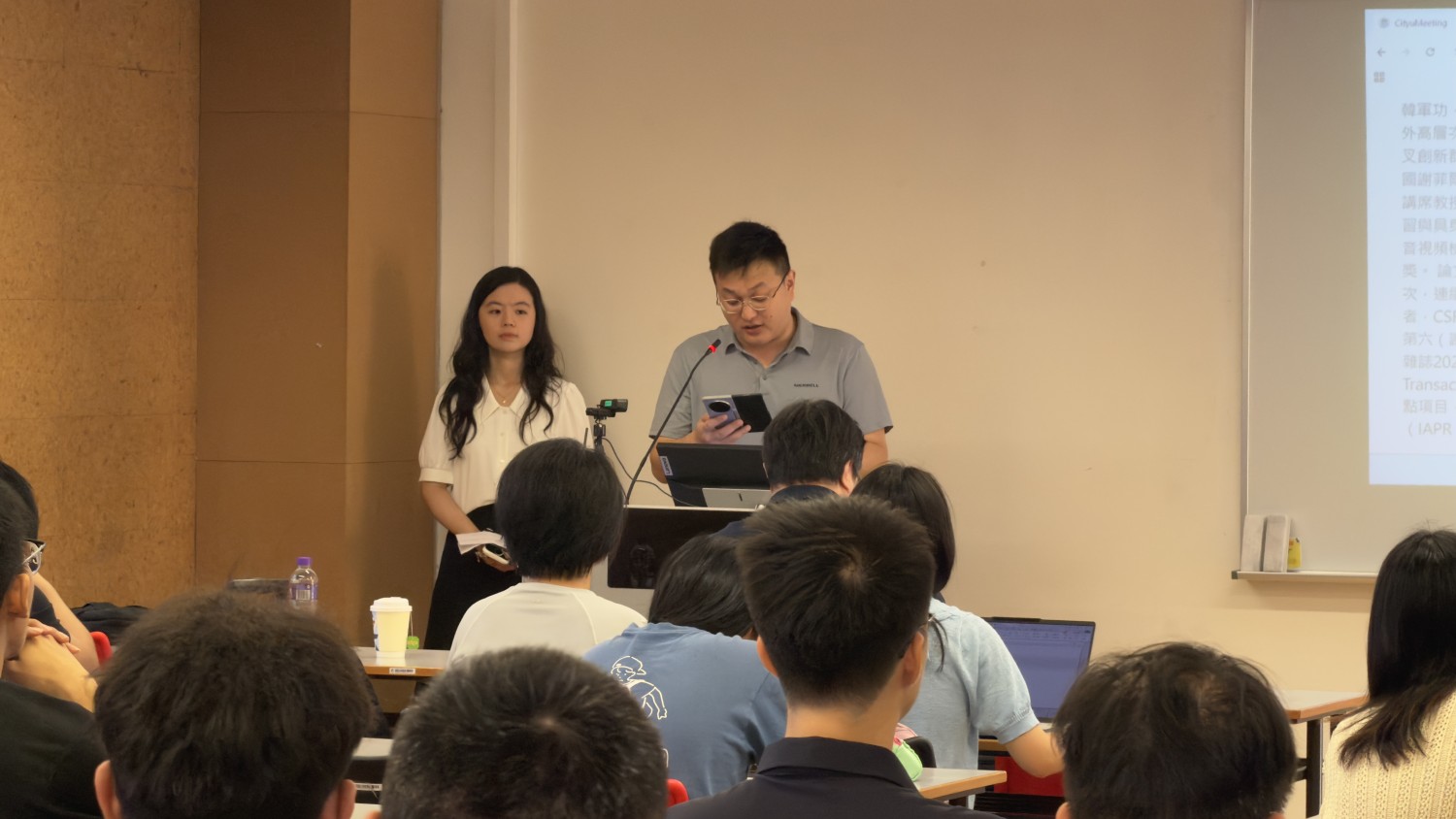
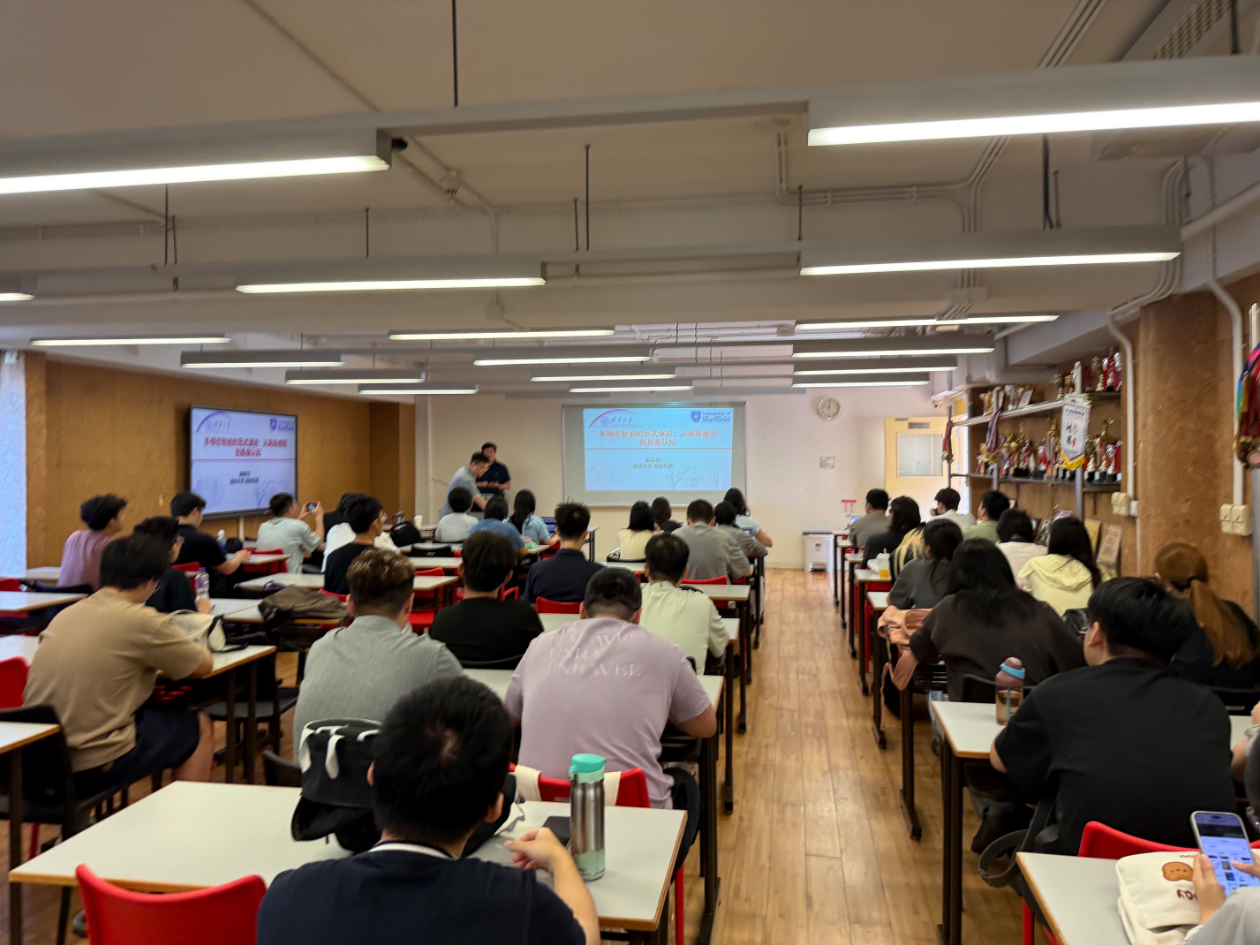
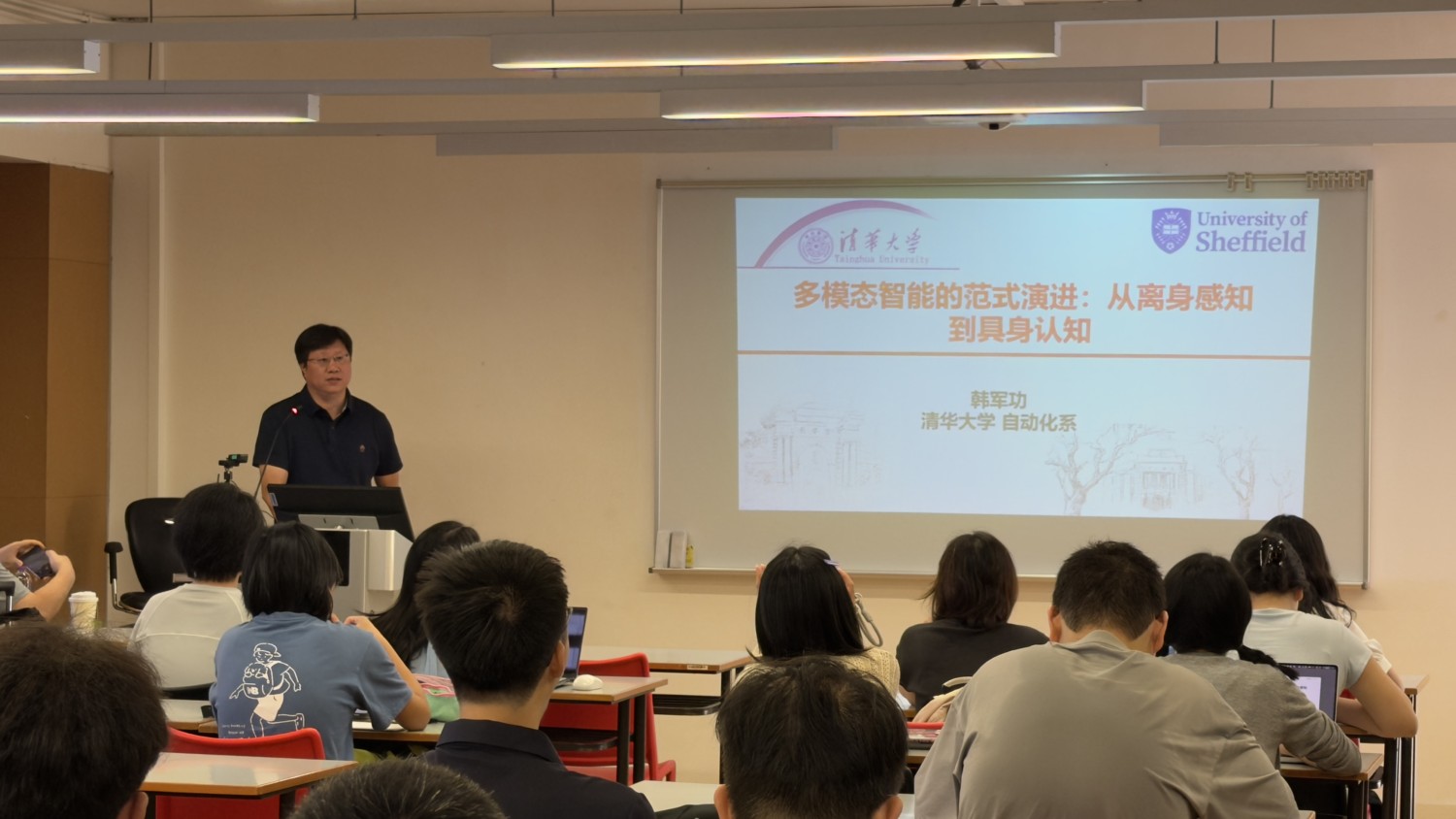
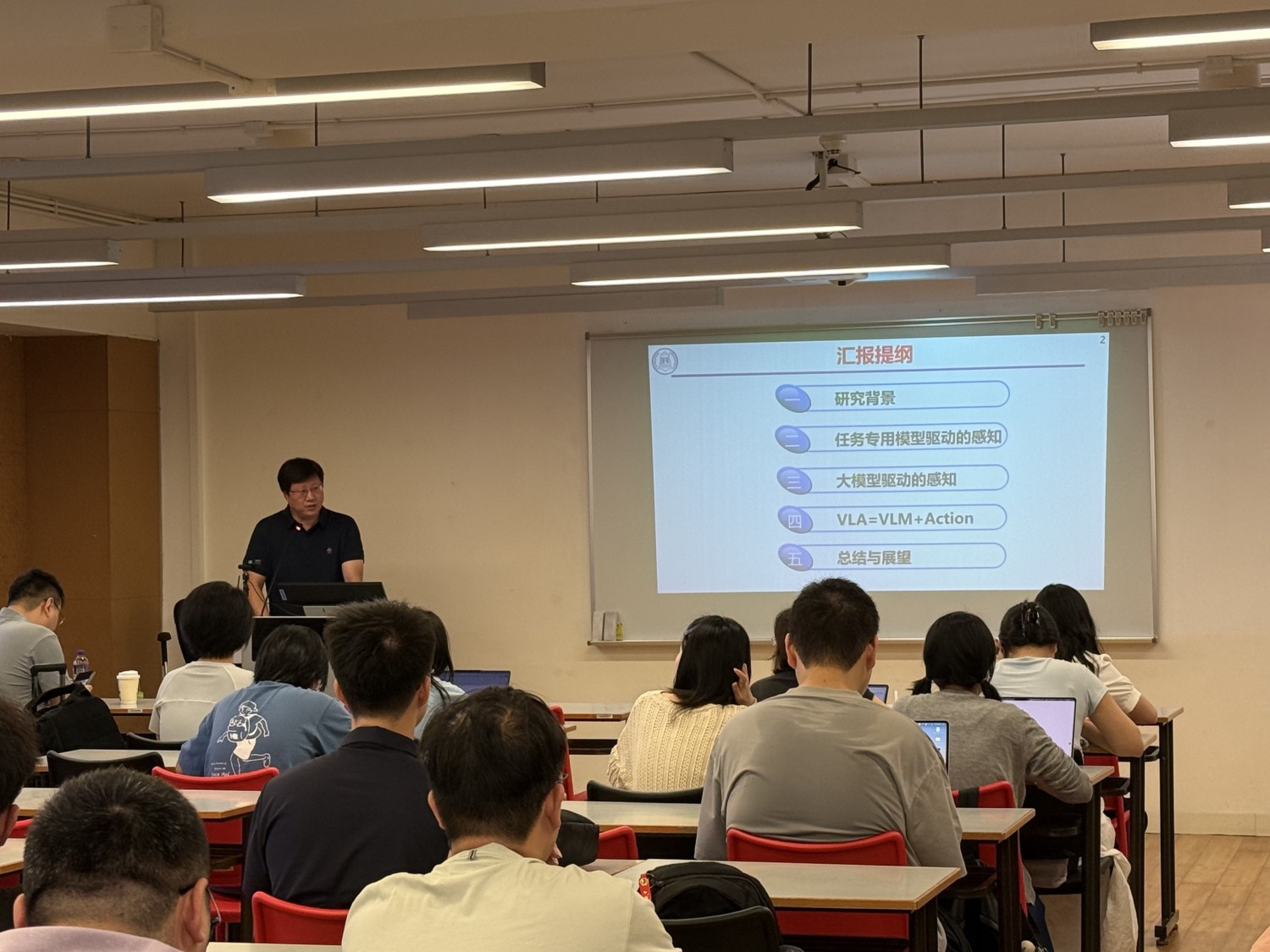
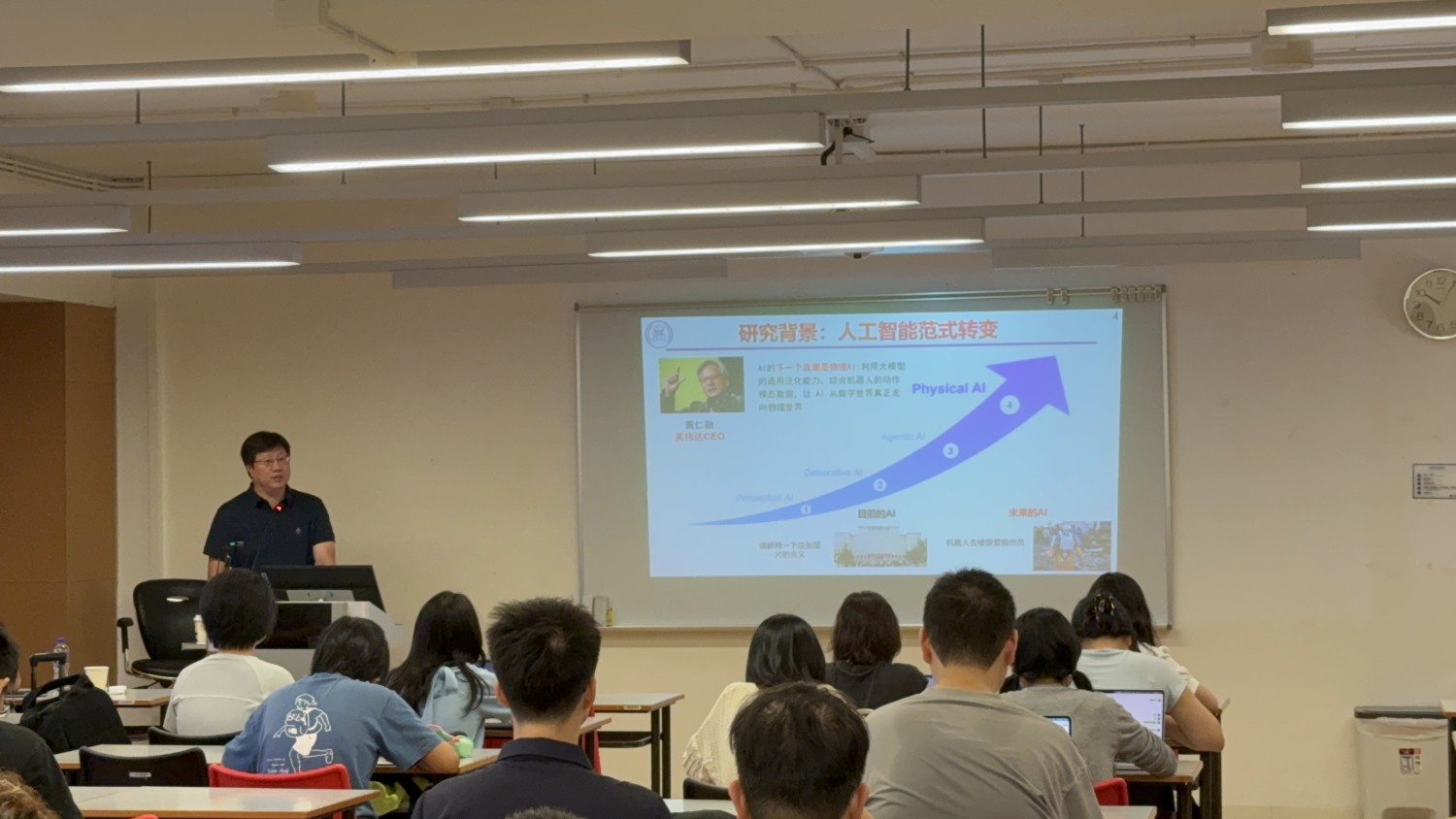
On the morning of 12 October, the Faculty of Data Science (FDS) of City University of Macau held an academic lecture titled "The Paradigm Evolution of Multimodal Intelligence: From Disembodied Perception to Embodied Cognition" in Room L105. Prof. Jungong Han, Xinghua Chair Professor of Tsinghua University, was invited as the keynote speaker. Assistant Professor Gengshen Wu, Programme Coordinator of Master's Programmes of FDS, introduced the speaker and delivered opening remarks. Approximately 60 master's and doctoral students of the Faculty attended the lecture.
During the lecture, Prof. Han shared his insights on the development of multimodal intelligence, systematically introducing how artificial intelligence has evolved from disembodied perception based on static data toward embodied cognition characterized by continuous interaction with the environment. Drawing on the advances in multimodal representation learning, multimodal large models, and generative artificial intelligence, Prof. Han analyzed the important role of the fusion of heterogeneous information—such as vision and language—in perception, understanding, and interaction in complex environments, and further discussed the issue of unified modeling of perception, reasoning, and action in embodied intelligence.
Drawing on his team's recent research in multimodal intelligent agents and embodied learning, Prof. Han highlighted key technologies including representation learning for generalization in open environments, active perception, and causal reasoning. He also offered his outlook on the opportunities and challenges ahead for the field, in light of the trend of multimodal intelligence evolving from disembodied learning toward embodied learning.
In the interactive Q&A session, faculty members and students engaged in in-depth exchanges with Prof. Han on topics including multimodal large models, embodied intelligence, and perception and reasoning in open environments. Drawing on the relevant research directions and his practical research experience, Prof. Han provided detailed answers to the questions raised, and the discussion was lively and thought-provoking.
The lecture deepened the Faculty's understanding of frontier research in multimodal intelligence and embodied intelligence, and offered faculty and students a valuable platform to grasp the research trajectory of artificial intelligence evolving from disembodied perception to embodied cognition. Looking ahead, FDS will continue to organize high-level academic exchange activities, promote academic interactions between faculty, students, and outstanding scholars at home and abroad, and further foster an open and vibrant research atmosphere.
