
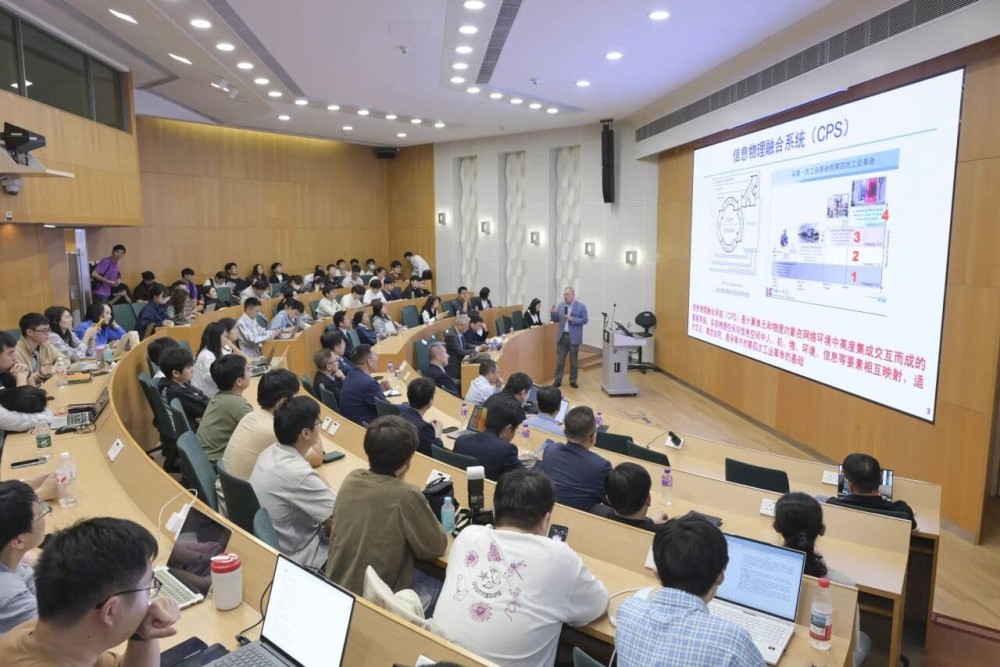
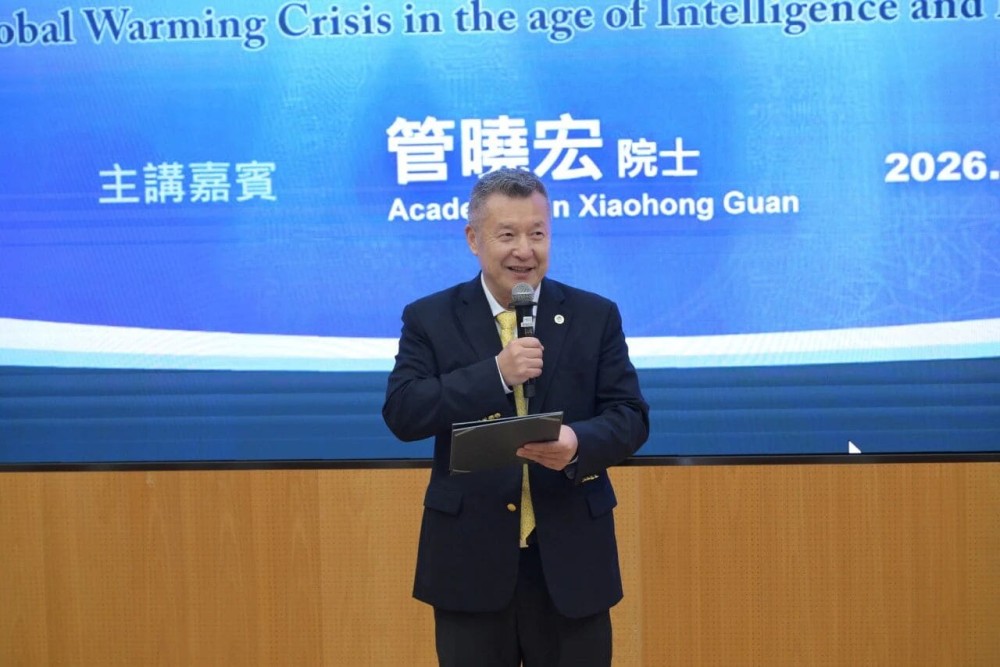
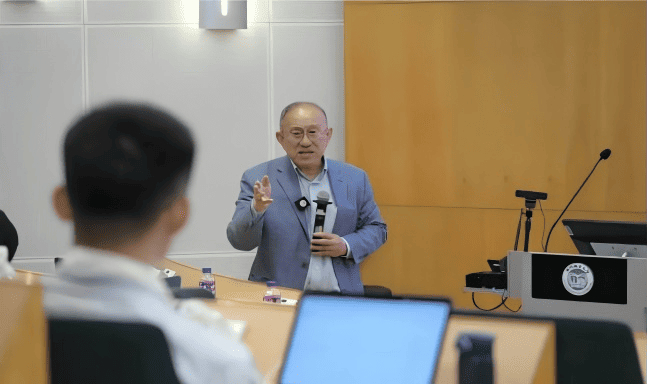
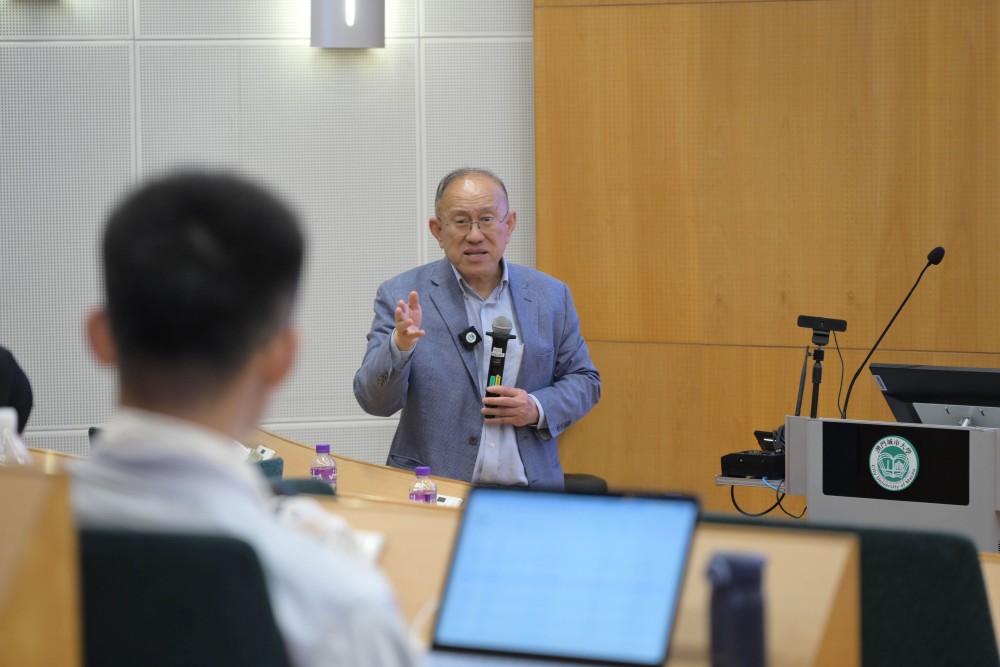
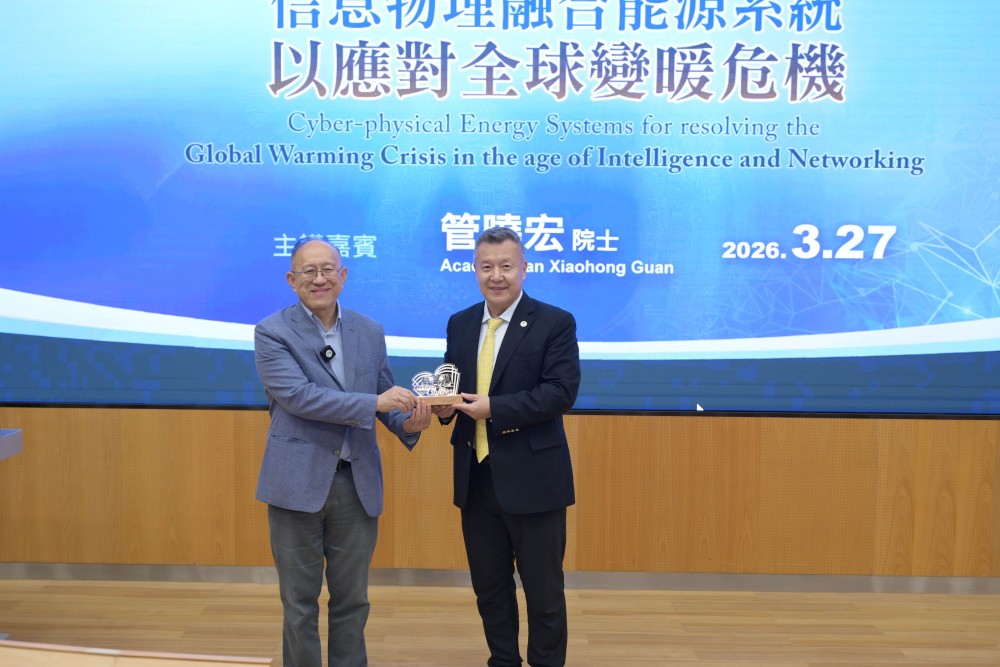
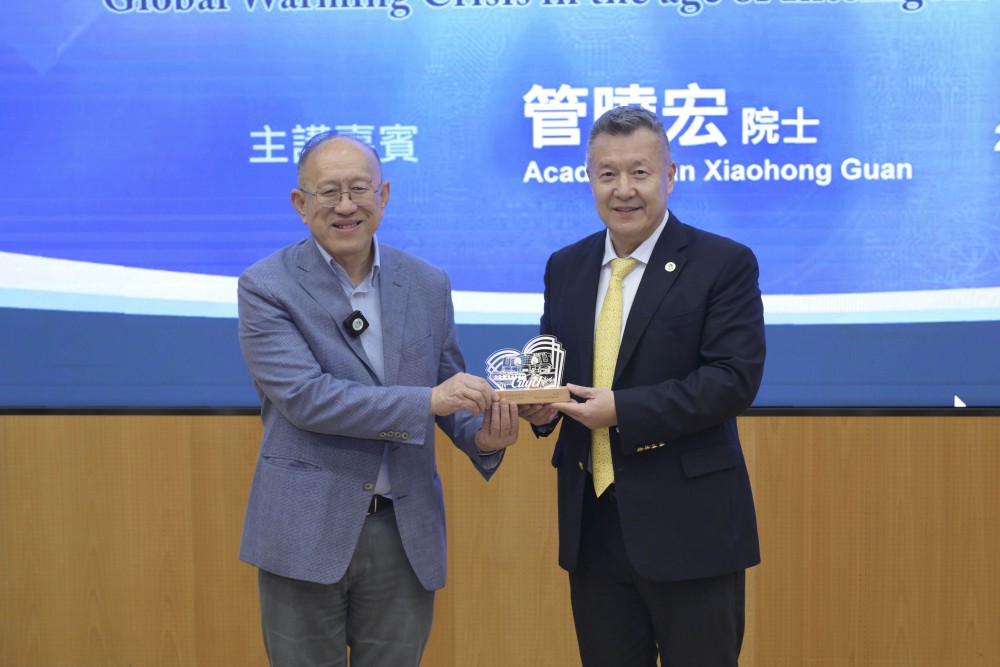
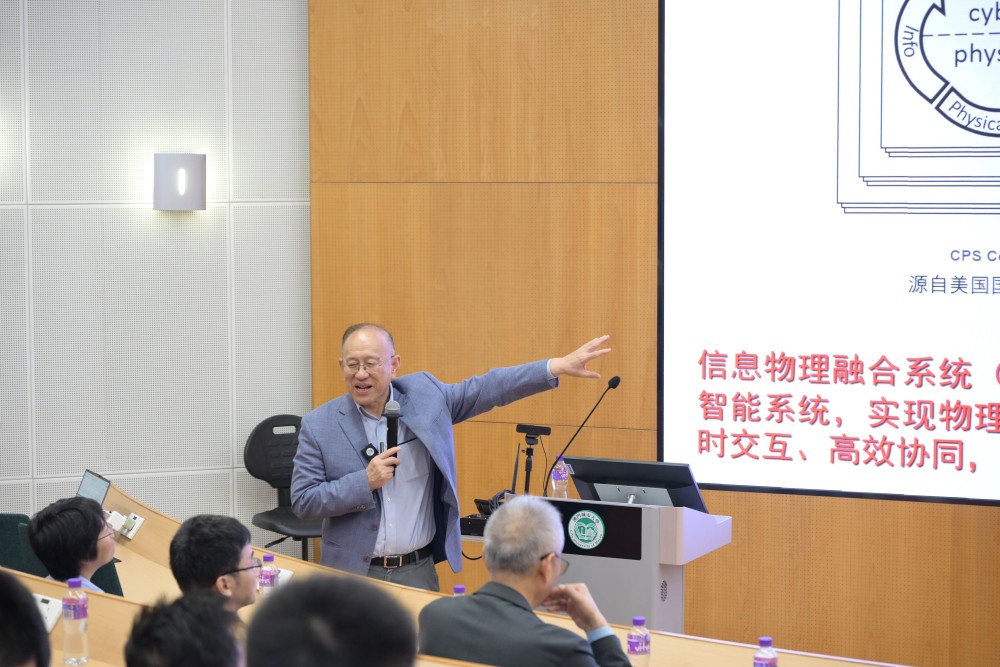
On the occasion of the 45th anniversary of City University of Macau, held an honorary doctoral lecture at the Taipa campus today in order to bring together academic ideas, explore cutting-edge issues and build an academic frontier exchange platform. Academician Guan Xiaohong, Academician of the Chinese Academy of Sciences, renowned systems engineer and honorary Ph.D.
President Liu Jun warmly welcomed Academician Guan Xiaohong. He stated that Academician Guan's lecture topic was highly relevant to our times. As a core city in the Greater Bay Area, Macao is actively exploring a path of green and low-carbon development. He believed that Academician Guan's sharing would not only broaden the academic horizons of faculty and students in the fields of energy science and intelligent technology, but also provide valuable insights for green development and technological innovation in Macao and even the country.
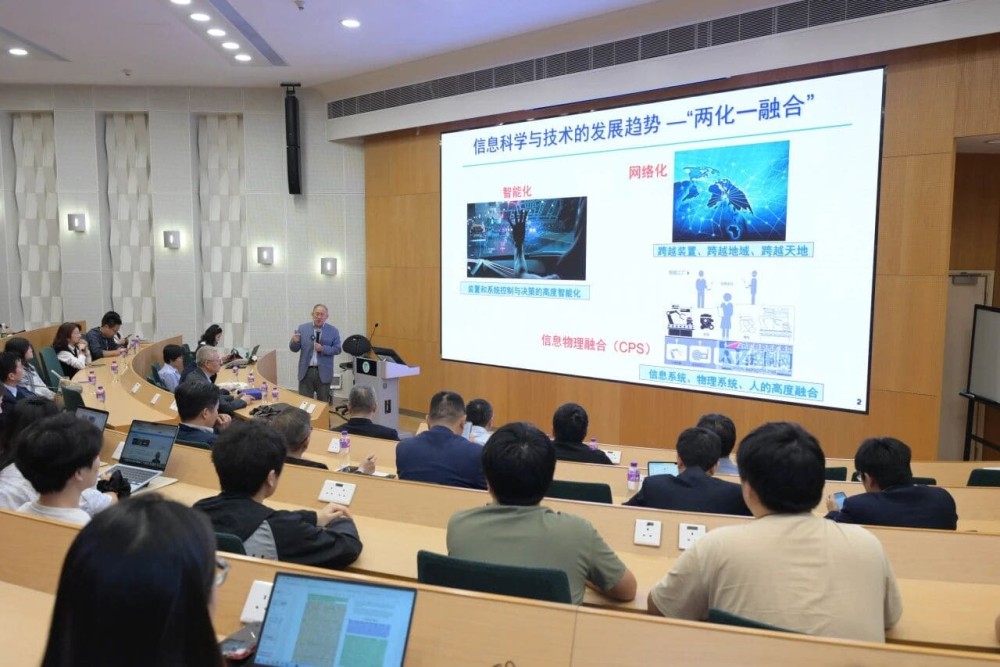
In his lecture, Academician Guan Xiaohong used "The Development Trend of Information Science and Technology—'Integration of Informatization and Industrialization'" as a starting point to systematically explain how Cyber-Physical Systems (CPS) can empower energy structure transformation to address global warming under the wave of networking and intelligence. He pointed out that facing the supply and demand balance challenges brought about by the integration of new energy sources into the grid, building a new energy architecture that highly integrates information systems, physical systems, and people has become an inevitable path to achieving the "dual carbon" goal. At the same time, Academician Guan Xiaohong deeply dissected the overall architecture of energy stations, including "source-storage synergy, hydrogen-electricity synergy, and supply-demand synergy," demonstrating the technological path of integrated sensing, communication, computing, and optimization. To vividly showcase the research and development achievements, Academician Guan Xiaohong shared several typical application scenarios, focusing on the overall solution for providing green energy supply for large-scale events and 5G base stations in the Shaanxi Yulin Zero-Carbon Smart Energy Station project. He also demonstrated cutting-edge technologies such as the energy station's digital twin system, intuitively presenting the deep interaction between physical entities and digital models. Furthermore, he proposed a new structure integrating "computing network, communication network, and energy network," exploring innovative paths for providing energy security for distributed zero-carbon data centers, and offering new ideas for technological innovation and industrial upgrading in the energy sector.
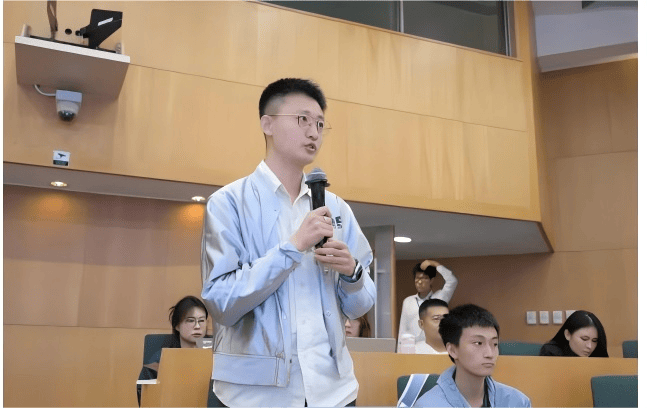
During the interactive Q&A session, faculty and students actively participated, engaging in in-depth discussions with Academician Guan Xiaohong on topics such as the stability control of renewable energy grid integration, the modeling accuracy of digital twin systems for energy stations, and the feasibility of implementing the "three-network integration" architecture in complex environments. This lecture not only provided a platform for City University of Macau faculty and students to exchange ideas with leading scholars and enhance their understanding of the field of cyber-physical systems, but also holds significant importance for promoting discipline development and contributing to Macau's green and low-carbon development. Furthermore, it brought more intellectual exchange and academic inspiration to faculty, students, and industry professionals.
