
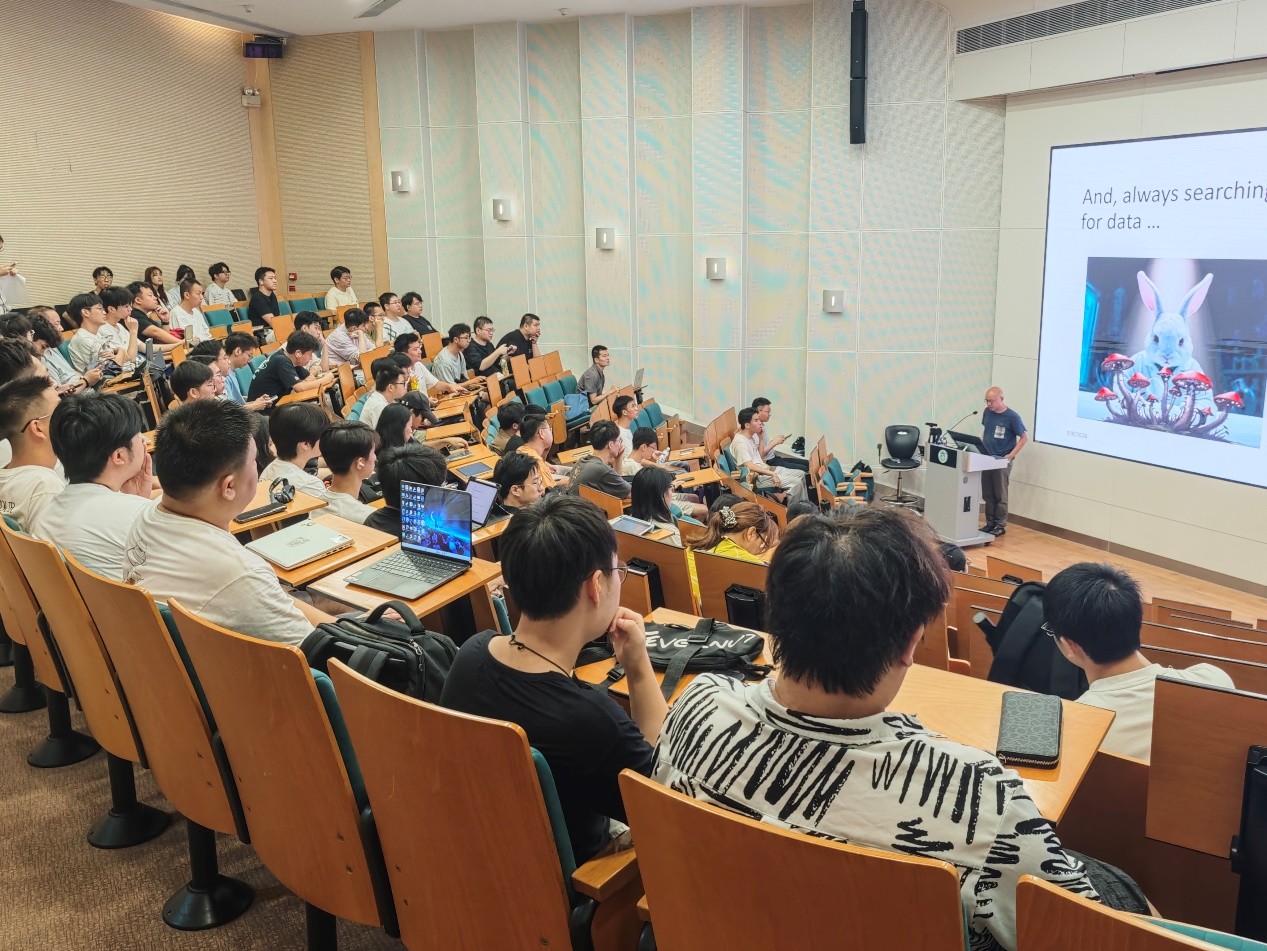
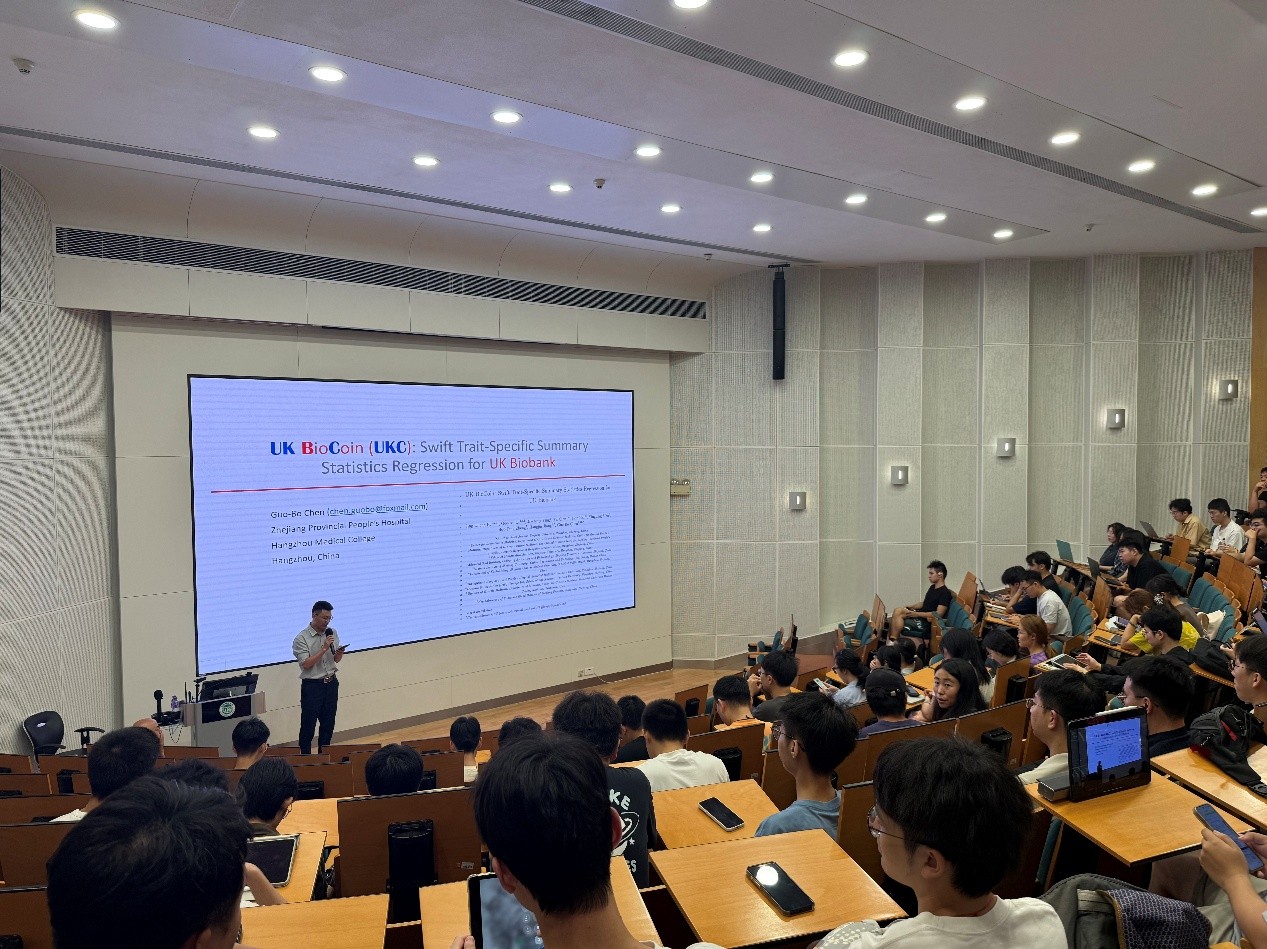
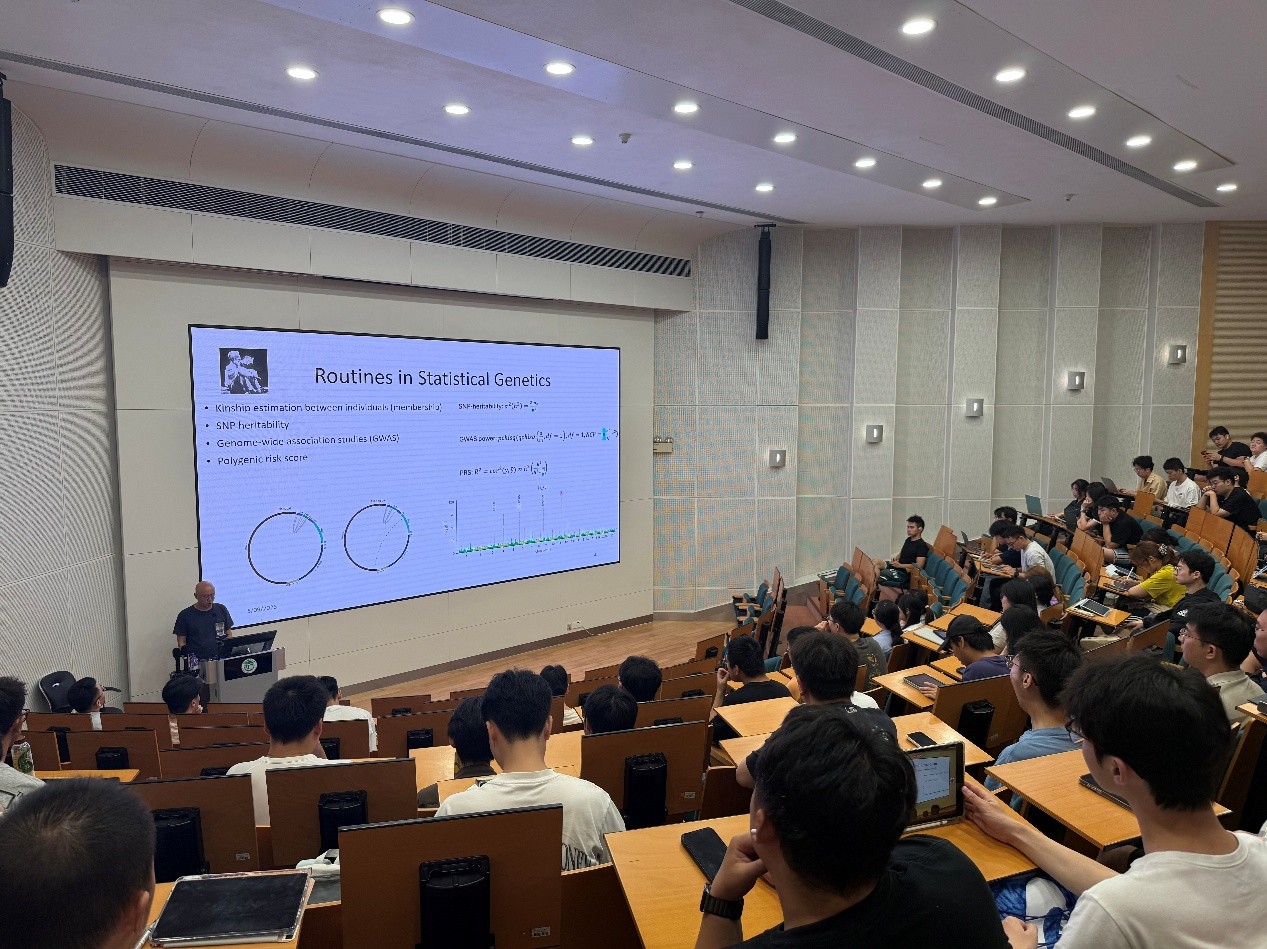
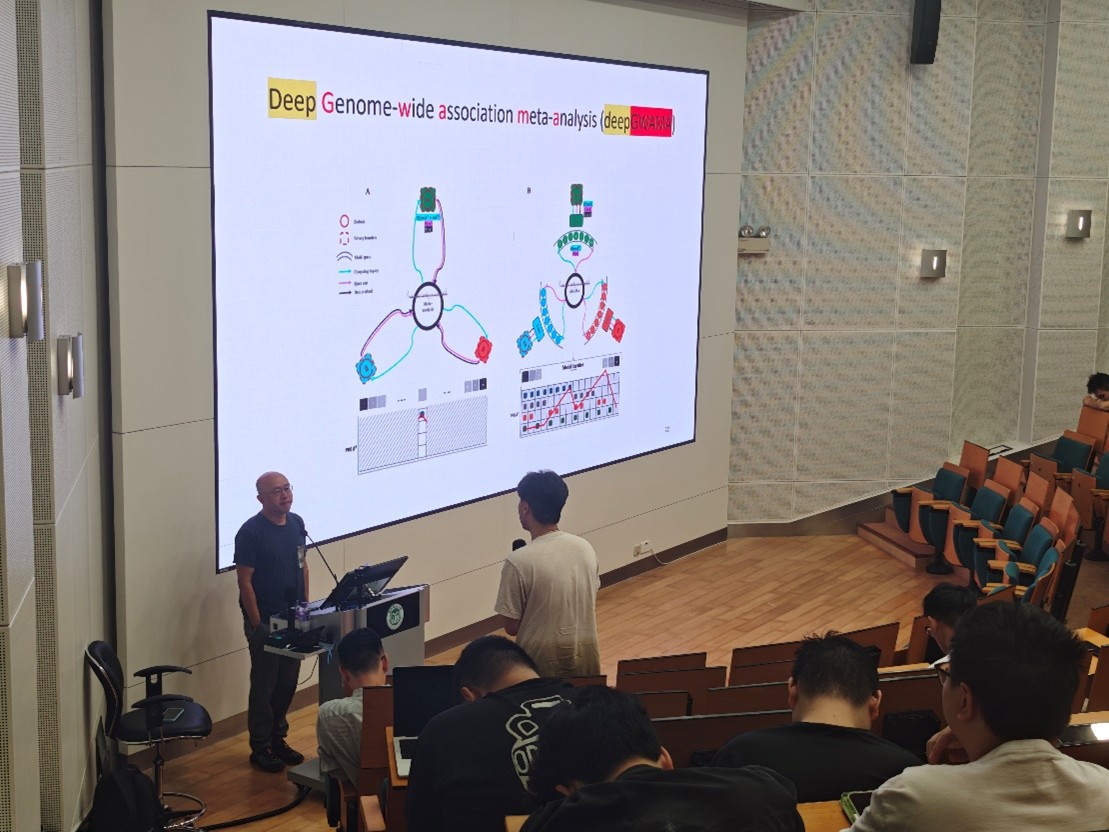
On the morning of September 8, 2026, an academic seminar organized by the Faculty of Data Science of City University of Macau was successfully held at HG02, Ho Yin Convention Centre, Taipa Campus. Dr. Chen Guobo, Associate Researcher at the Institute of Clinical Research, Zhejiang Provincial People’s Hospital, was invited to deliver a lecture titled “NSS Is All You Need in Shifting UK Biobank Online GWAS Computing Offline”. Focusing on computational approaches to genome-wide association studies (GWAS) using UK Biobank data and the secure sharing of data, the lecture offered valuable insights of both academic and practical significance.
Dr. Chen has long been engaged in research on statistical genetics, the genetic architecture of complex diseases, and efficient computation of biobank-scale genomic data. He has conducted research at the University of Virginia, the Center for Statistical Genetics at the University of Alabama at Birmingham, and the Queensland Brain Institute at the University of Queensland. In recent years, he has led multiple projects funded by the National Natural Science Foundation of China. He has published more than 50 papers in leading international journals, including Nature Communications, Cell Genomics, and Genome Biology, and has developed statistical genetics software tools such as QGAStation and EigenGWAS.
Dr. Chen highlighted the Naïve Summary Statistics (NSS) approach developed by his team during the lecture, which doesn’t pose any privacy risks. He then talked about how NSS has been applied to UK Biobank molecular phenotype data and other biobank datasets. Dr. Chen also shared some fun stories about his team’s work and his experiences with getting international data, which really got everyone engaged. This line of research is gradually shaping a secure data-sharing and computation model, kind of like federated learning, giving a new path for big collaborative genetic data analysis across different platforms and cohorts. It also supports high-throughput GWAS meta-analysis, which is great for pushing forward research on the genetics of complex diseases.
During the Q&A session, faculty members and students actively raised questions. Drawing on his extensive research experience, Dr. Chen provided detailed and insightful responses. The lively academic exchange deepened the participants’ understanding of bioinformatics, statistical genetics, and secure data computation.
The seminar concluded with warm applause. Through this lecture, faculty members and students gained a deeper understanding of the efficient analysis, secure sharing, and privacy protection of large-scale genomic data.
