
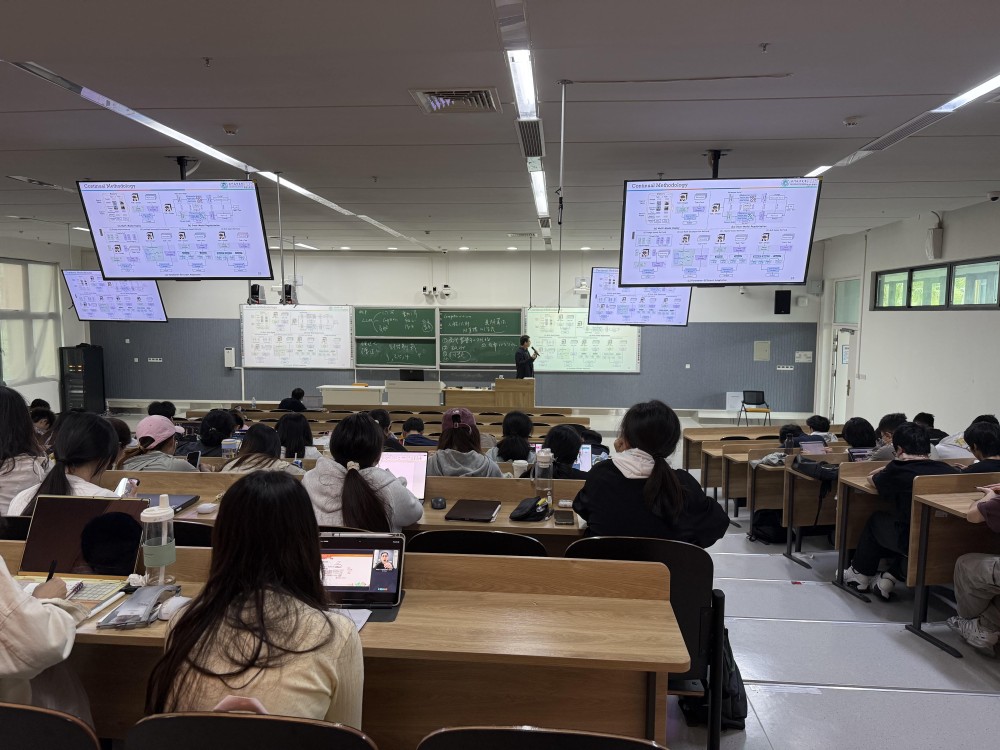
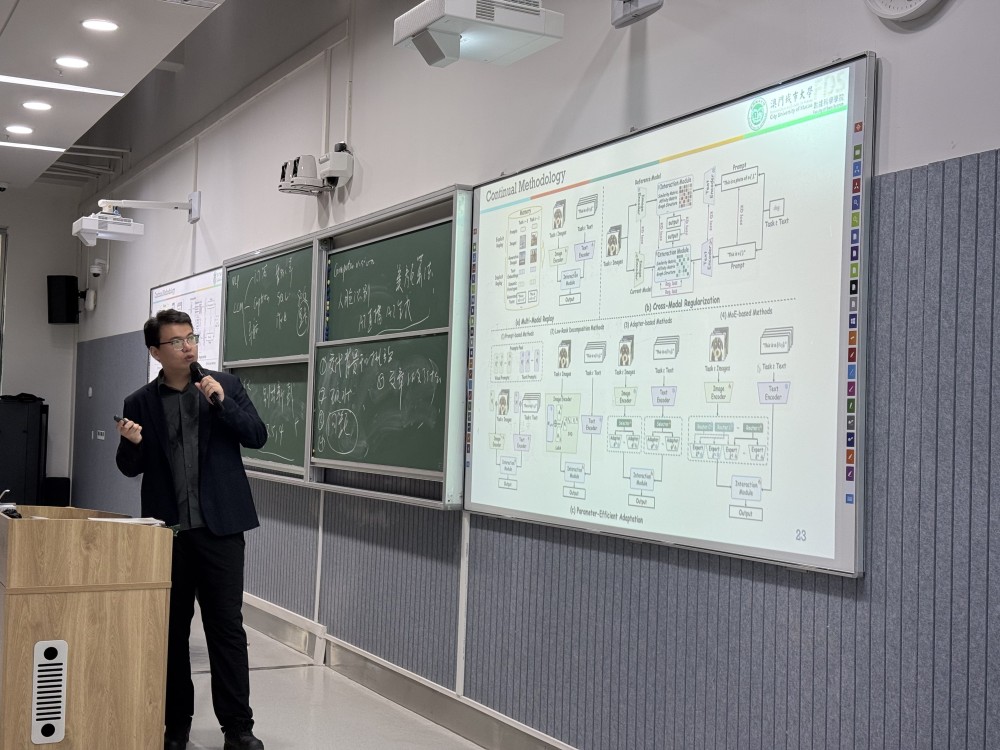
To deepen academic exchange between City University of Macau and Minzu University of China, a team from the Faculty of Data Science traveled to Minzu University of China Hainan International College from November 5–7, 2025, to deliver four specialized academic lectures.
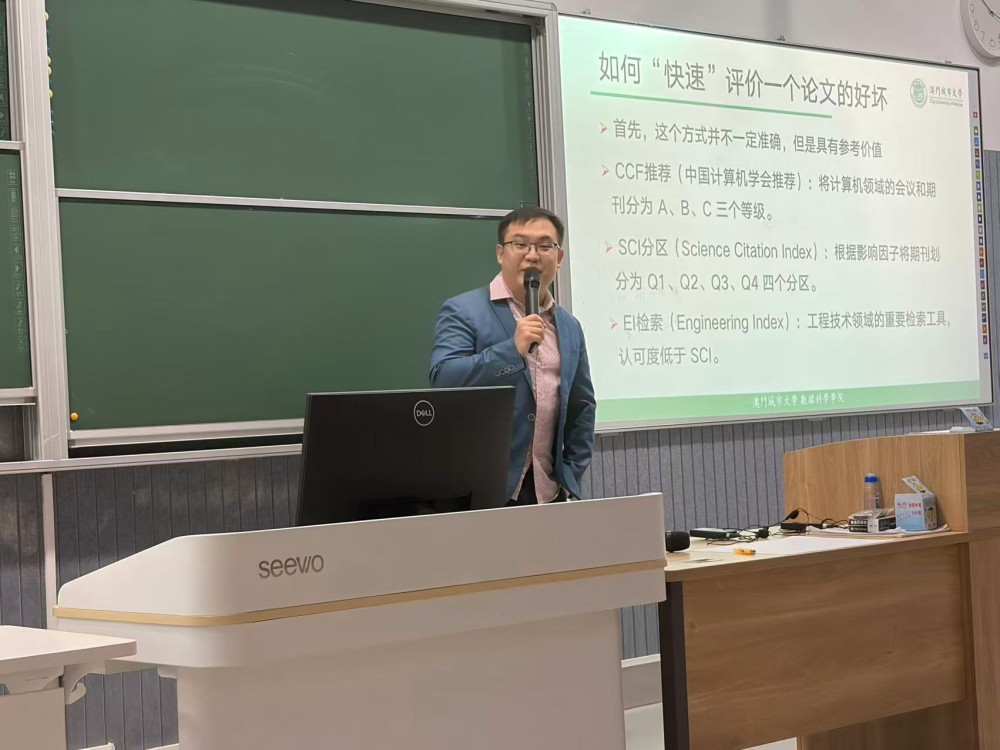
Assistant Professor Chen Hao, with the topic "Popular Science for Computer Science Academic Papers," catered to the fundamental needs of novice researchers by systematically outlining the logic and key norms of academic writing. He provided detailed explanations on critical aspects including topic selection, paper structure, language expression, and submission strategies. By analyzing typical cases, he examined common pitfalls in academic writing and how to avoid them, clearly establishing a cognitive framework for academic writing for the attending students.
Assistant Professor Zhu Hongguang focused on the cutting-edge direction of "Dynamic Scene Adaptation for Multimodal Large Models," providing an in-depth analysis of the core bottlenecks and breakthrough pathways in multimodal technology development. He noted that current multimodal large models face key challenges such as environmental adaptation delays, and traditional fusion architectures are insufficient to meet the real-time response requirements of complex scenarios. He elaborated on the design philosophy of adaptive modality fusion architecture, which achieves efficient collaborative reasoning of multimodal information through dynamic weight allocation mechanisms and scene-aware modules, offering new practical insights for the implementation of related technologies.
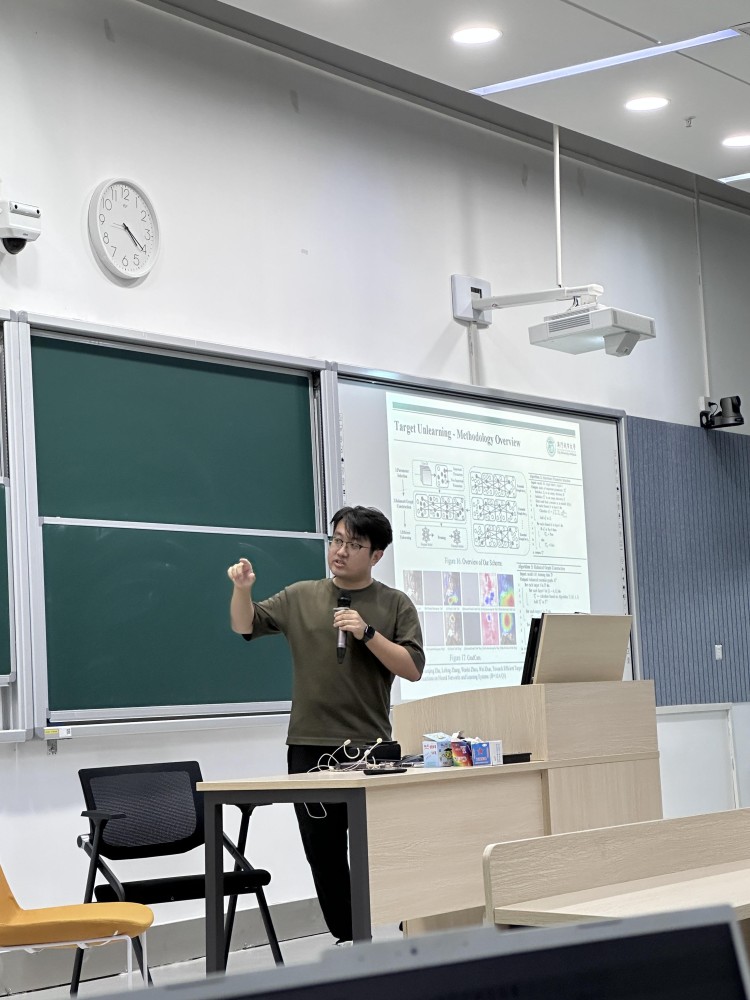
Assistant Professor Xu Heng, with the theme "Machine Unlearning: A Reverse Process in AI Models," introduced the theoretical foundations and application value of AI model unlearning technology. He explained the core definition of model unlearning—making the model's "forgetting effect" on specific data equivalent to that data never having participated in training—and systematically reviewed mainstream technical approaches for parameter forgetting. He compared the trade-offs of each method in terms of forgetting efficiency and accuracy, and discussed in the context of privacy protection regulations the important role of model unlearning technology in scenarios such as safeguarding user data rights and controlling sensitive information, providing students with new perspectives for research and application in the field of data security.
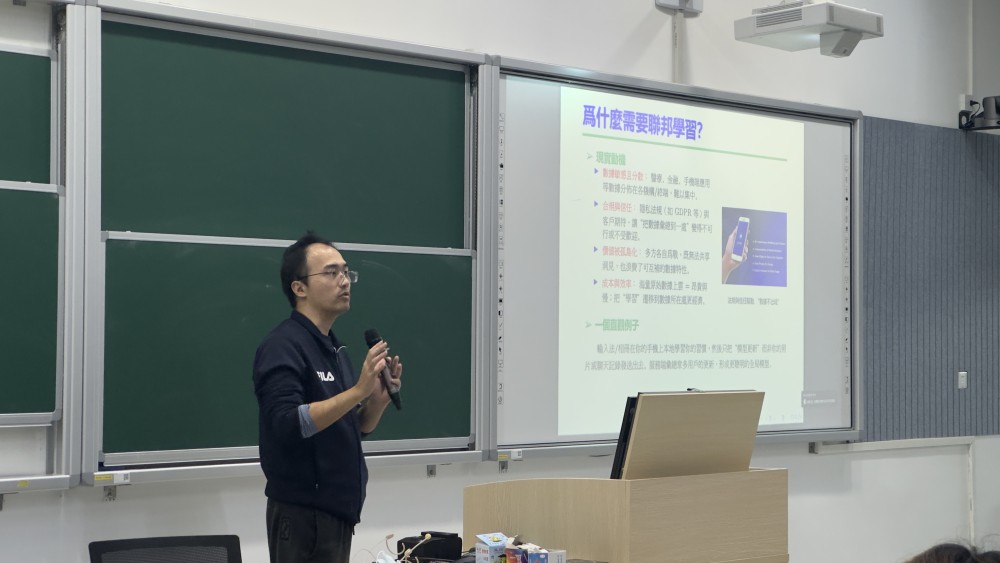
Assistant Professor Cai Jianping delivered a thematic lecture on "High-Availability Federated Learning: Frontiers in Privacy Security Frameworks and Industrialization Practices." He noted that the contradiction between data silos and privacy protection requirements has become a major obstacle to AI industrialization, while federated learning provides an effective solution to this challenge through its collaborative training model of "data stays local." Assistant Professor Cai shared industrial application cases of federated learning architecture, providing an in-depth analysis of key security considerations in framework design and implementation challenges, offering students valuable practical insights.
This exchange initiative broadened students' intellectual horizons, promoted the integration of theory and practice, and inspired students to continue exploring and innovating in the research field, thereby deepening cooperation and exchanges between the two universities while offering students valuable opportunities for academic engagement.
