
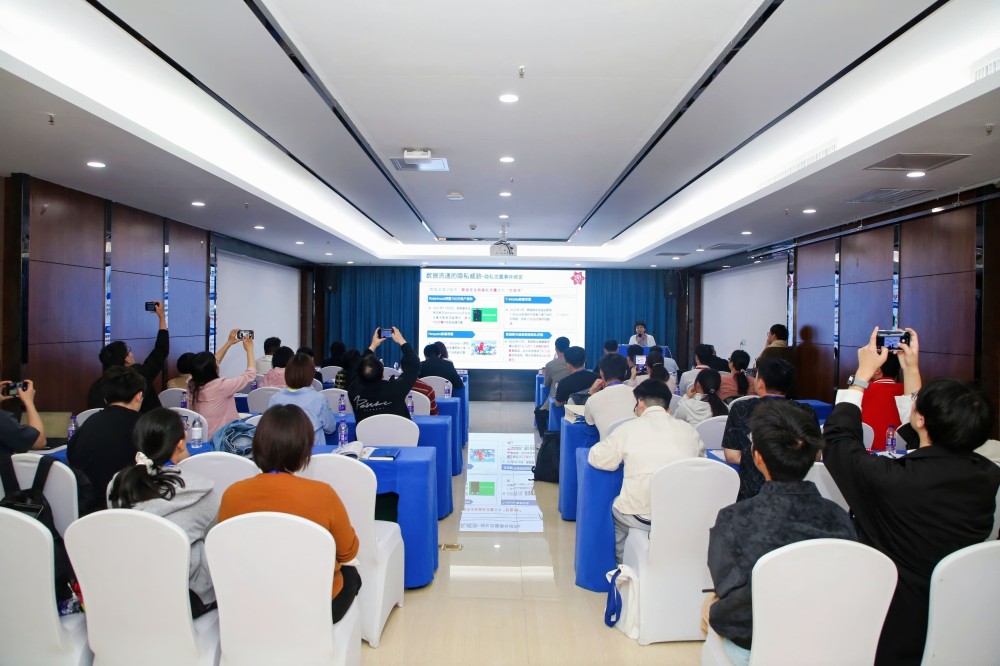

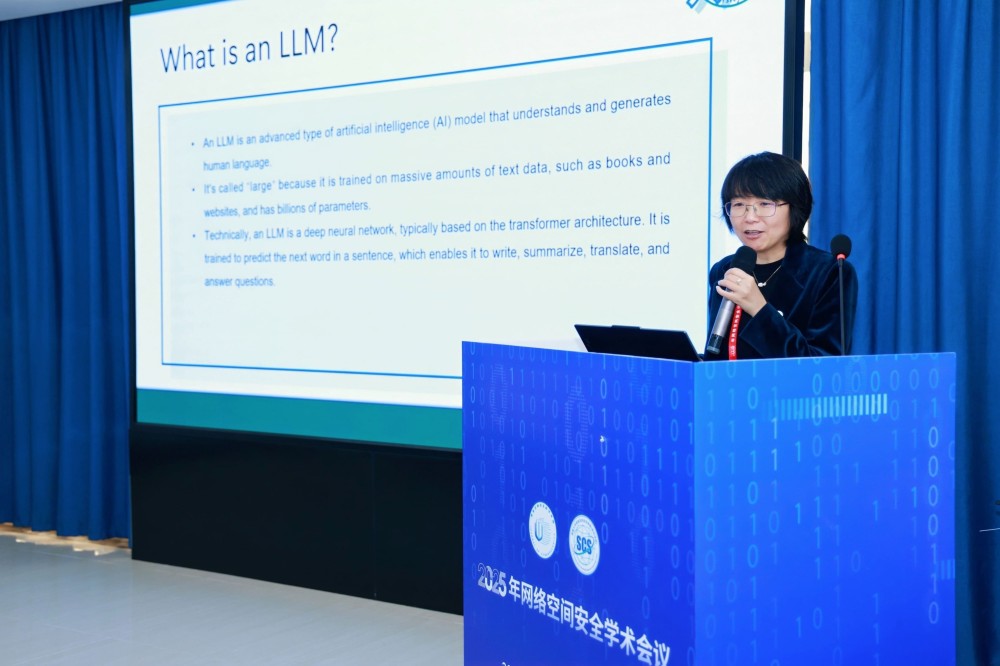
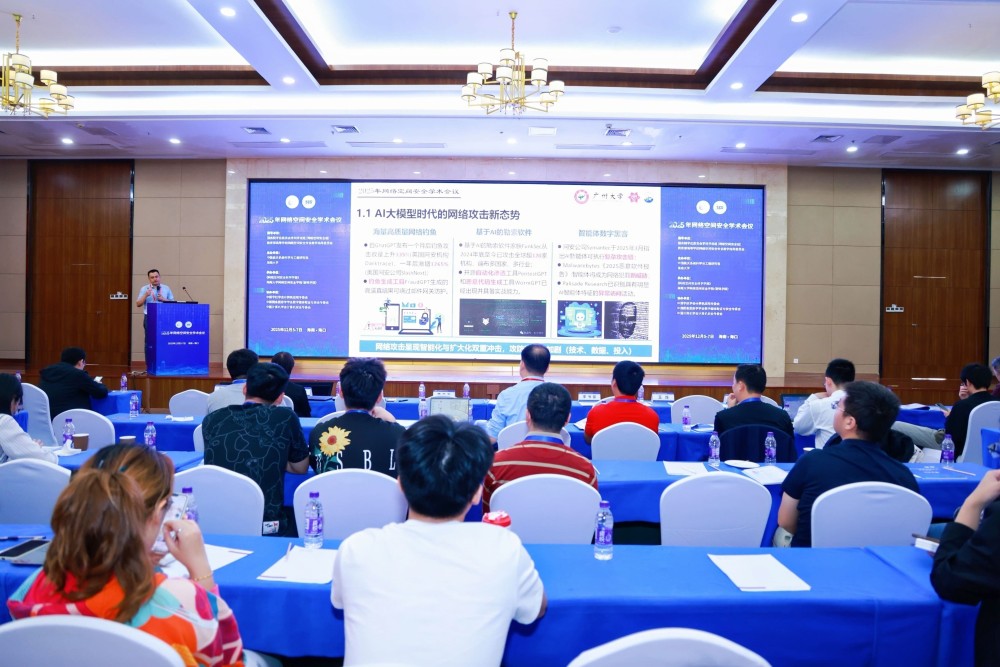
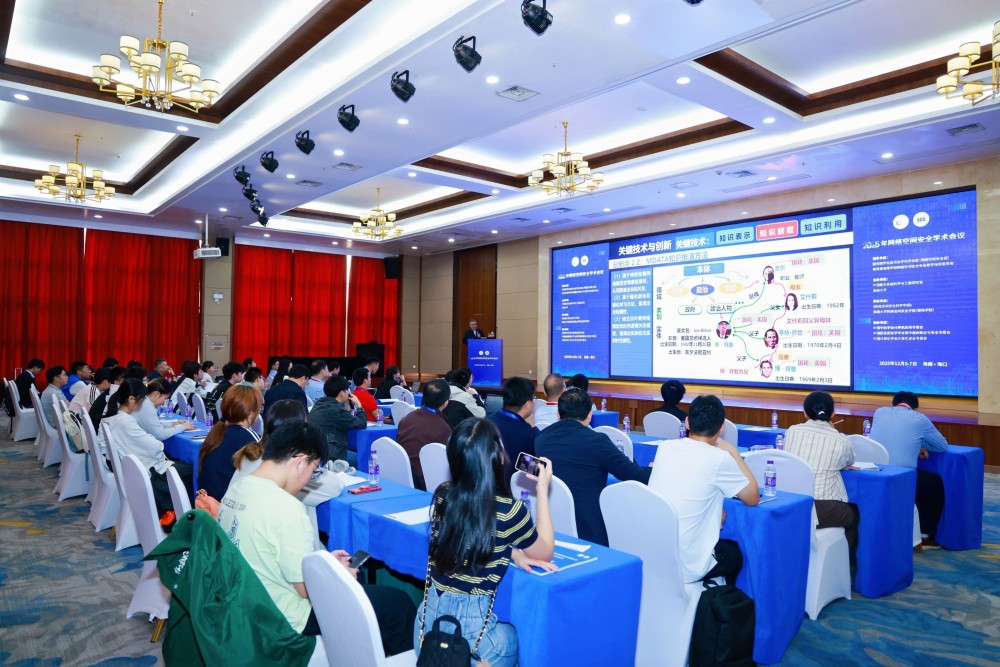

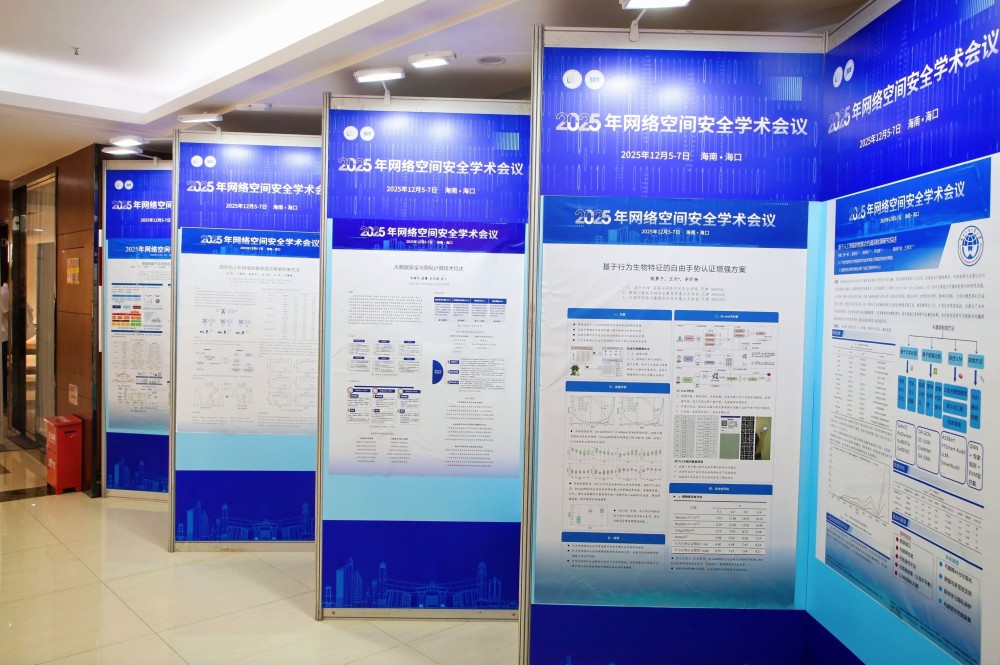
From December 5–7, 2025, the 2025 Cyber Security Academic Conference, hosted by the Journal of Cybersecurity, was successfully held in Haikou, China. As one of the highlights of the main conference, the “AI Models and Information Security” sub-forum brought together top scholars and industry experts from across China. The participants conducted in-depth discussions on cutting-edge topics such as large model security, information element governance, and intelligent terminal protection, providing important theoretical support and practical pathways for the healthy, reliable, and sustainable development of artificial intelligence technology.
Under the leadership of Professor Zhou Wanlei, Vice Rector and Dean of the Faculty of Data Science at City University of Macau — the organizer of this sub-forum — an internationalized research team specializing in information security and privacy has been formed, establishing unique advantages in the field of cross-border information governance and security.
- Academic Excellence: The team systematically conducts research on cross-border information compliance, information security, and privacy quantification. It has published papers in top-tier international venues such as S&P, USENIX Security, NDSS, IEEE TIFS, and IEEE TDSC, with more than 500 SCI papers in the security field and over 100 proposed defense and privacy-protection algorithms.
- Deep Industry-Academia-Research Integration: The School has co-established 8 joint laboratories with enterprises, including the “Joint Laboratory for Information Flow Security and Compliance Governance” with Macau Malta Technology and Maibo Yuntong Technology. Relying on these platforms, breakthroughs have been achieved in core technologies such as cross-border information security compliance detection and encrypted information flow risk monitoring. More than 50 practical applications have been commercialized, generating economic and social benefits exceeding 200 million RMB.
- Serving National Strategies: Leveraging its strengths in cyberspace security, the School has undertaken key research projects such as “Cross-Border Information Collaborative Management and Privacy Computing for Credit Investigation” and established a cross-border information compliance governance framework, providing solid technical and institutional support for information element circulation in the Greater Bay Area and nationwide.
Under the careful organization of City University of Macau, seven renowned experts and scholars delivered outstanding keynote speeches, offering in-depth analyses of full-stack security challenges from underlying hardware to top-level compliance.
- Top-Level Perspective: Building Full-Chain and Compliance-Oriented Security Systems
Facing the increasingly complex evolution of AI systems, Professor Shen Chao from Xi’an Jiaotong University presented “AI Chain Security: From Small Models to Large Models to Embodied Intelligence”. He proposed an innovative analytical perspective starting from the component structure of the intelligent supply chain, systematically analyzed inherent security risks during AI system evolution, and focused on confidentiality, integrity, and privacy. His talk provided systematic guidance for the secure application of large model software systems.
Professor Yin Lihua from Guangzhou University delivered “Privacy Protection and Compliance Technologies from the Perspective of Cross-Border Information Flows”. Focusing on privacy leakage challenges in cross-border data flows, she explored advanced technologies including differential privacy, federated learning, and information compliance governance, offering technical solutions for building secure, compliant, and efficient cross-border information governance systems that effectively address difficulties arising from differing laws and regulations.
- Offense-Defense Game: New Confrontations Between Large Models and Adversarial Examples
Large models serve both as objects of defense and tools of attack. Professor Wang Ding from Nankai University presented “Password/Key Guessing Technology Based on Large Models”. To address the poor adaptability of large language models in password guessing tasks, he developed the PassLLM framework using low-rank adaptation (LoRA) fine-tuning. Experiments on 3.37 billion real passwords achieved state-of-the-art guessing success rates, opening a new large-model-based path for evaluating password strength.
In the field of visual security, Professor Shen Meng from Beijing Institute of Technology delivered “Adversarial Example Generation and Detection Technology for Commercial Intelligent Image Classification Systems”. From both attack and defense perspectives, he analyzed the vulnerability of deep neural networks in commercial systems and shared the latest achievements in adversarial sample generation and detection, providing forward-looking defense strategies to improve the reliability of image classification services.
- Physical and Perceptual Layers: Strengthening Defenses for Terminals and Hardware
Addressing perceptual-layer risks in intelligent terminals, Professor Jin Wenqiang from Hunan University proposed the novel concept of “intrinsic immunity” in his talk “Perceptual Security of Intelligent Terminals”. Through real-world multi-source risk cases, he introduced an innovative approach of reversely transforming threat features into defense resources, aiming to solidify the trustworthy foundation of intelligent terminals.
Professor Han Xingshuo from Nanjing University of Aeronautics and Astronautics focused on real-world physical scenarios in “Vulnerability Research on Binocular Stereo Depth Estimation Systems in Real Deployments”. His research revealed inherent vulnerabilities in stereo depth estimation (SDE) models, showing that unoptimized specific patterns can break key model assumptions even in dynamic real-world scenes — a finding that lays an important foundation for building more robust 3D perception systems.
In hardware-level security, Associate Professor Lu Zhaojun from Tianjin University presented “Hardware Vulnerability Mining and Security Enhancement for Artificial Intelligence”. Targeting microarchitectural vulnerabilities that cross virtualization boundaries to steal models and keys, he constructed an efficient vulnerability mining framework and cross-layer security risk verification mechanism. By optimizing processor security design, the approach achieves significant risk reduction with low overhead, providing quantifiable and verifiable tools for AI hardware security.
Conference Summary and Outlook
The successful conclusion of this sub-forum was not only an academic feast but also a concentrated demonstration of the research strength and organizational capability of the Faculty of Data Science at City University of Macau in the field of cyberspace security. By building a high-level academic exchange platform, the organizer effectively promoted deep integration between the Mainland China and Macau in AI security and information governance.
Looking ahead, City University of Macau will continue to leverage its dual advantages of “Special Administrative Region + Greater Bay Area”, rely on its internationalized research teams and joint laboratory cluster, and deepen cultivation in cross-border information compliance, privacy computing, and AI security. The university will continue to drive the transformation of scientific achievements from laboratory to industry applications, contributing “CityU Macau wisdom” to the secure development of China’s digital economy.
