
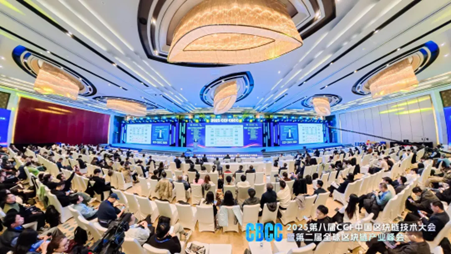
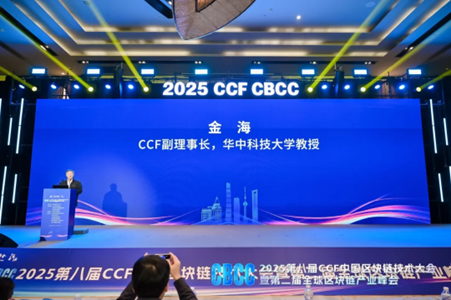
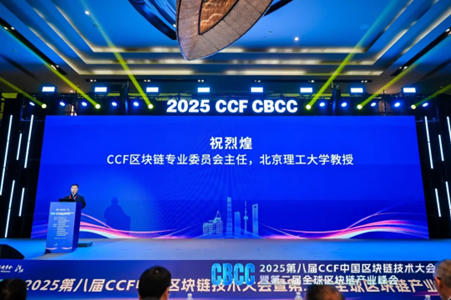
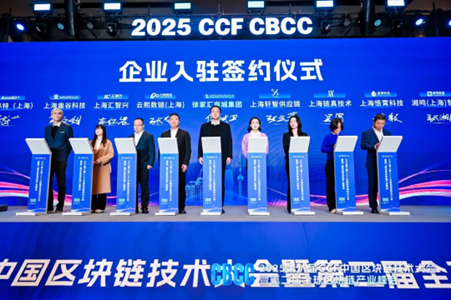
From December 19 to 21, 2025, the 8th CCF China Blockchain Technology Conference & the 2nd Global Blockchain Industry Summit was successfully held in Xuhui District, Shanghai. The conference was organized by the China Computer Federation (CCF), co-organized by the CCF Blockchain Technical Committee in collaboration with multiple research institutions and industry entities, and received strong support from departments including the Shanghai Xuhui District Data Bureau. The event brought together thousands of participants, including leaders from government regulatory bodies, renowned experts and scholars in the blockchain field, representatives from leading enterprises, as well as faculty and students from universities and research institutes across the nation. Together, they explored the development trends of blockchain technology, practical application experiences, and pathways for industrial integration and innovation, showcasing China's vibrant innovation ecosystem in the fields of blockchain and the digital economy. The Faculty of Data Science at Macau City University was invited to attend. Professor Zhou Wanlei, Vice President (Academic) and Dean of the Faculty of Data Science, and Associate Professor Zhu Tianqing, Associate Dean of the Faculty, represented the university at the relevant agendas, delivering keynote reports and engaging in academic exchanges.
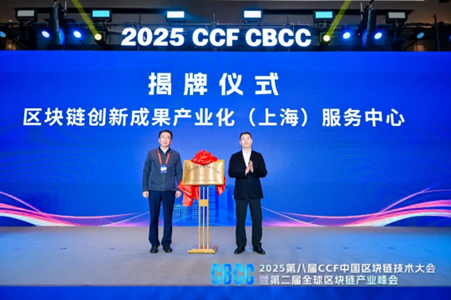
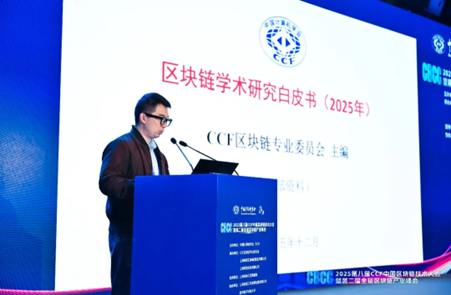
During the opening ceremony, several significant innovative achievements were released. A blockchain industrialization service platform and a collaborative innovation platform were inaugurated. A series of blockchain industry and technology application cases were showcased, further promoting the practical expansion and ecosystem development of blockchain technology in areas such as government services, supply chain collaboration, and data element governance. Concurrently, the conference released the Blockchain Academic Research White Paper along with multiple outstanding papers, theses, and case studies. These publications systematically presented the latest advancements in China's blockchain technological innovation, industrial practice, and talent cultivation, providing crucial support and a dialogue platform for industry-academia-research collaborative development.
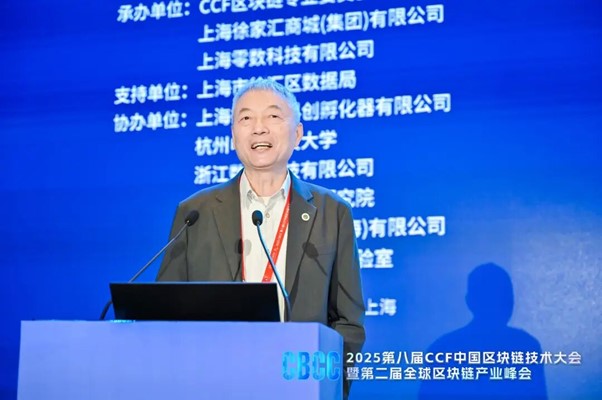
During the main forum session, Vice President Zhou Wanlei was invited to deliver a keynote report titled "Blockchain-Enhanced Federated Learning with Machine Unlearning Mechanism: A Trustworthy Approach." Starting from the complex collaborative characteristics of federated learning in IoT environments, he analyzed key practical challenges such as data unlearning verifiability, privacy protection, and system integrity. He proposed using blockchain technology to establish an immutable record-keeping mechanism for unlearning requests and operation processes. By enhancing process transparency and accountability traceability, this approach aims to increase the trustworthiness and compliance of federated learning model updates and knowledge unlearning behaviors. The report, combined with relevant experimental scenarios and system design practices, demonstrated the important role of blockchain in improving the trusted execution and governance capabilities of federated learning. It provided new directions and methodological pathways for promoting the deep integration of the two technologies, garnering widespread attention and positive feedback from attending experts and scholars.
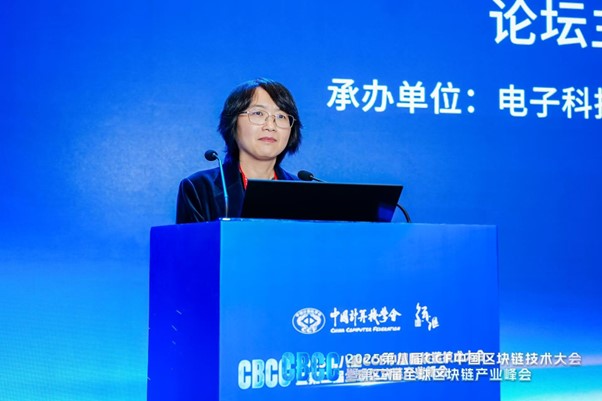
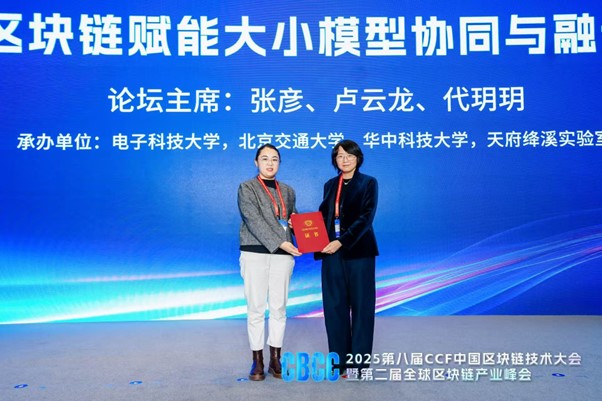
In the technical forum on "Blockchain Empowering the Coordination and Integration of Large and Small Models," Associate Dean Zhu Tianqing delivered a keynote report titled "From Large Models to Autonomous Agents: Blockchain for Building Verifiable Intelligent Collaboration Networks." Focusing on the trend of large model-driven intelligent systems moving towards autonomy and collaboration, the report systematically elaborated on the crucial roles of blockchain in autonomous agent collaboration networks, including trusted recording, incentive governance, and cross-entity interaction assurance. It discussed how key mechanisms such as multi-agent task collaboration, behavior auditing, and accountability constraints can achieve verifiability and traceability through on-chain collaboration. The report unfolded from three levels: theoretical framework, application scenarios, and methodological implementation, showcasing the Faculty of Data Science's cutting-edge exploration in the interdisciplinary research direction of "Blockchain × Large Models × Multi-Agent Systems." It provided new technical insights and research support for building trustworthy autonomous intelligent systems.
During the conference, the two representatives also participated in multiple thematic forums and academic exchange activities. They engaged in in-depth discussions with experts from domestic and international universities, research institutions, and industry enterprises on topics including blockchain technology standardization, privacy computing and data security governance, trustworthy AI collaboration, and industrial applications. Preliminary cooperation consensuses were reached in areas such as scientific research collaboration, joint project applications, and talent cultivation practices, laying a solid foundation for promoting the faculty's future cross-institutional collaborative innovation and regional scientific cooperation.
In recent years, the Faculty of Data Science at Macau City University has closely aligned with national demands for digital economy development and technological innovation. It has continuously focused on key research areas including blockchain technology, federated learning and privacy protection, trustworthy artificial intelligence, and data element governance, actively promoting the output of original research findings and the transformation and application of these results in practical scenarios. Being invited to deliver keynote reports at both the main forum and a thematic forum of this conference fully reflects the high recognition from both academia and industry regarding the faculty's research strength and academic contributions. It has further enhanced Macau City University's academic and social influence in the interdisciplinary field of blockchain and artificial intelligence. In the future, the faculty will continue to strengthen collaborative cooperation with universities and research institutions within the Guangdong-Hong Kong-Macau Greater Bay Area, across the nation, and internationally. It will further deepen the integrated development of academic innovation and talent cultivation, contributing more high-level scientific research achievements and intellectual support to promote regional digital economy construction and the cultivation of new quality productive forces.
